
193 poignant photographs by 136 photographers from 55 countries tell timeless stories of people on the move
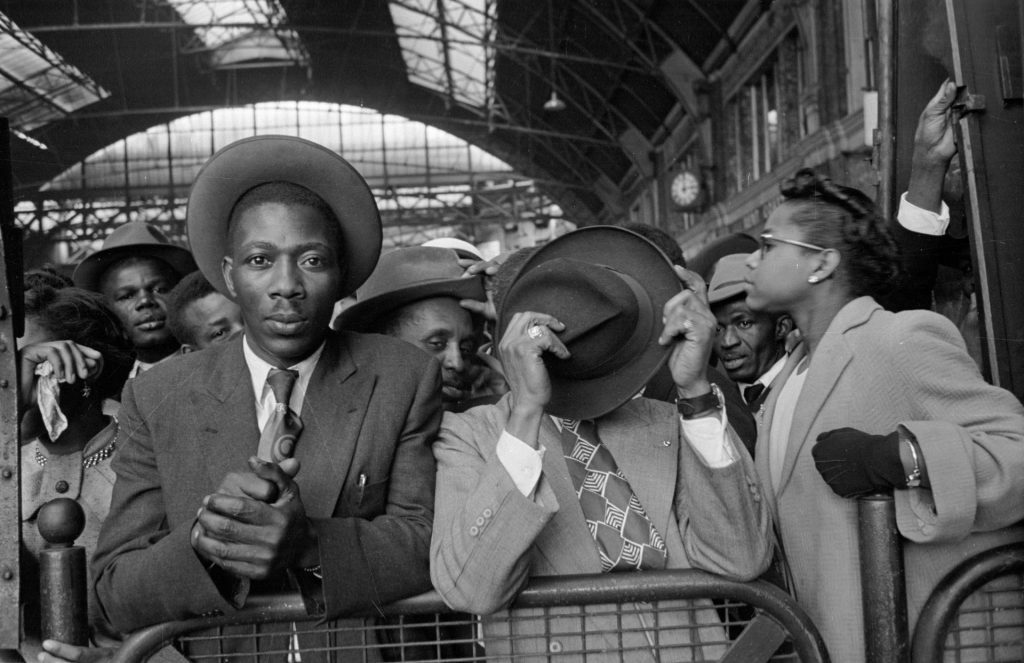
The Family of Migrants is inspired by the legendary exhibition The Family of Man, an ode to humanity created by photographer and curator Edward Steichen, that opened at the Museum of Modern Art in New York in 1955.
Fenix, Rotterdam’s new art museum on the theme of migration, will present as one of its first exhibitions opening May 16th, 2025. The Family of Migrants brings together nearly 200 photographs by 136 photographers in 55 countries.
Curated by Hanneke Mantel, Head of Exhibitions and Collection at Fenix, in consultation with photographers, archivists, curators, and photo editors worldwide The Family of Migrants is inspired by Edward Steichen’s legendary exhibition The Family of Man, regarded by many as the greatest photographic exhibition of all time, which was first shown at MoMA in 1955 and seen by millions as it toured the world.
Iconic photographs and new work
This new exhibition includes works ranging from 1905 to the present day and includes a mix of documentary images, portraits and journalist photography drawn from international archives, museum collections, image banks, social media and newspapers. Themes explored include family, love, the danger of the voyage and saying goodbye.
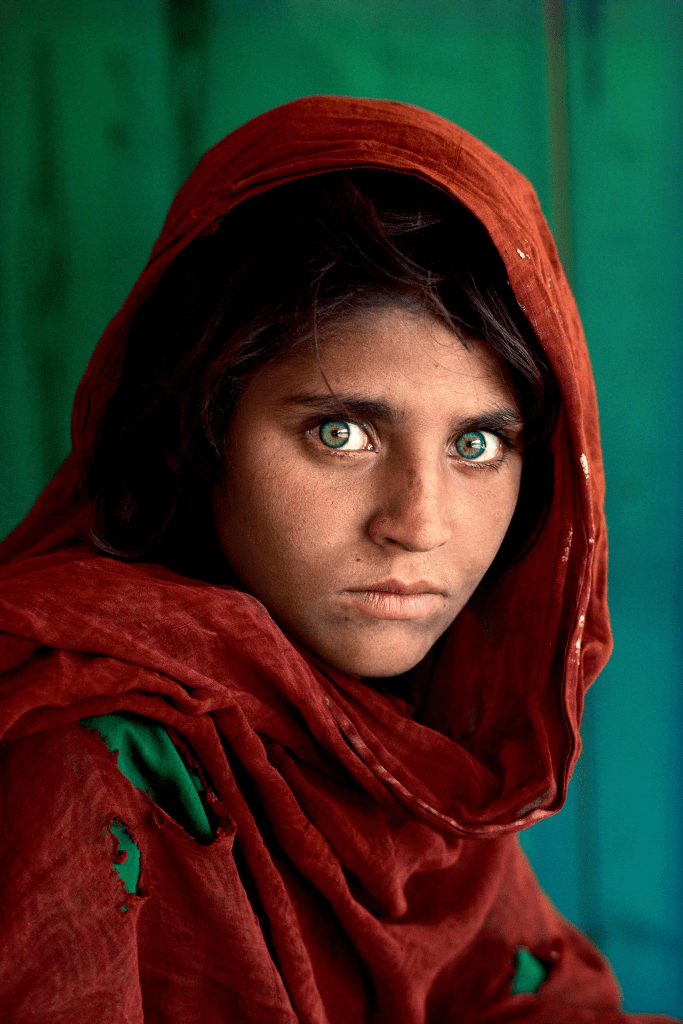
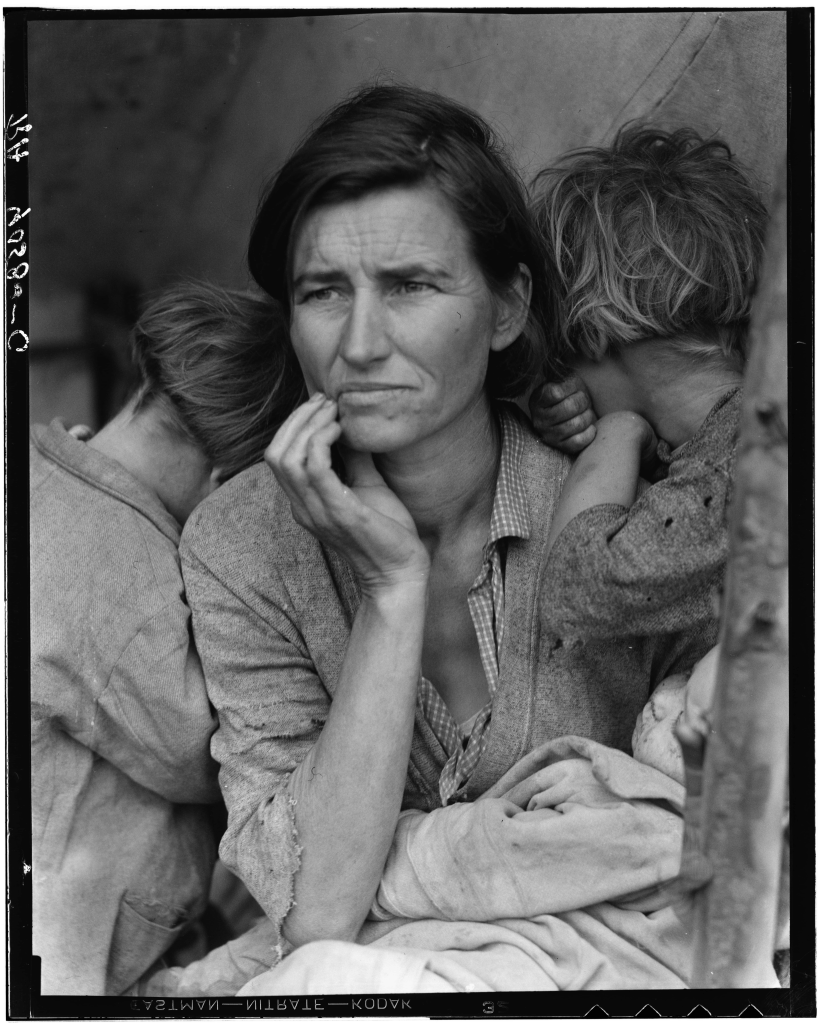
It features iconic photographs such as Migrant Mother (1936), the famous photograph of Florence Owens Thompson taken by Dorothea Lange during the Great Depression, and Afghan Girl (1984), the portrait of young Sharbat Gula by Steve McCurry used as cover of National Geographic. The Family of Migrants features work by a mix of established and emerging photographers, including include Lewis Hine, Chien-Chi Chang, Abbas, Robert de Hartogh, Éva Besnyő, Fouad Elkoury, Yasuhiro Ogawa, Emin Özmen, Sergey Ponomarev and Ata Kandó.
All pictures from the book will be on display at the permanent exhibition of the same name. Book accompanying the inauguration of the Fenix art museum in Rotterdam on May 16, 2025.
FENIX Address: Paul Nijghkade 5, 3072 AT Rotterdam, Nederland
Publication
The book of the same name accompanying the exhibition, published by Hannibal Books, will feature reproductions of the full set of photographs in the show, an introductory essay by Fenix curator Hanneke Mantel, and contributions from Anke Reitz, former curator of the permanent exhibition of The Family of Man in Luxembourg, Edwards Steichen’s birthplace, and Joumana El Zein Khoury, Executive Director of the World Press Photo Foundation.
Dutch-Iraqi writer Rodaan Al Galidi, Moroccan poet Rim Battal, Danish-Dutch philosopher Stine Jensen, Indian-born British chef Asma Khan, Syrian–Canadian author and activist Danny Ramadan and Chinese-born American author C Pam Zhang have contributed essays to the publication. It will be available in multiple languages, including English, French, Arabic and Dutch.
Human stories
Hanneke Mantel, Curator of The Family of Migrants, said: “The Family of Migrants has been developed over five years of research, exploring photographs on the theme of migration from all over the world. Photography is an accessible, democratic medium that is an integral part of society and everyday life. The exhibition shows that in every era there has been movement of people, be it out of free will, out of necessity or under pressure. Migration shapes the world, separating and connecting people, but when we talk about migration the focus all too quickly shifts to figures or politics, rather than people. For this reason, telling a human story is the common thread in the photo selection. At its core The Family of Migrants, just like The Family of Man, is about people.”

BOOK INFORMATION
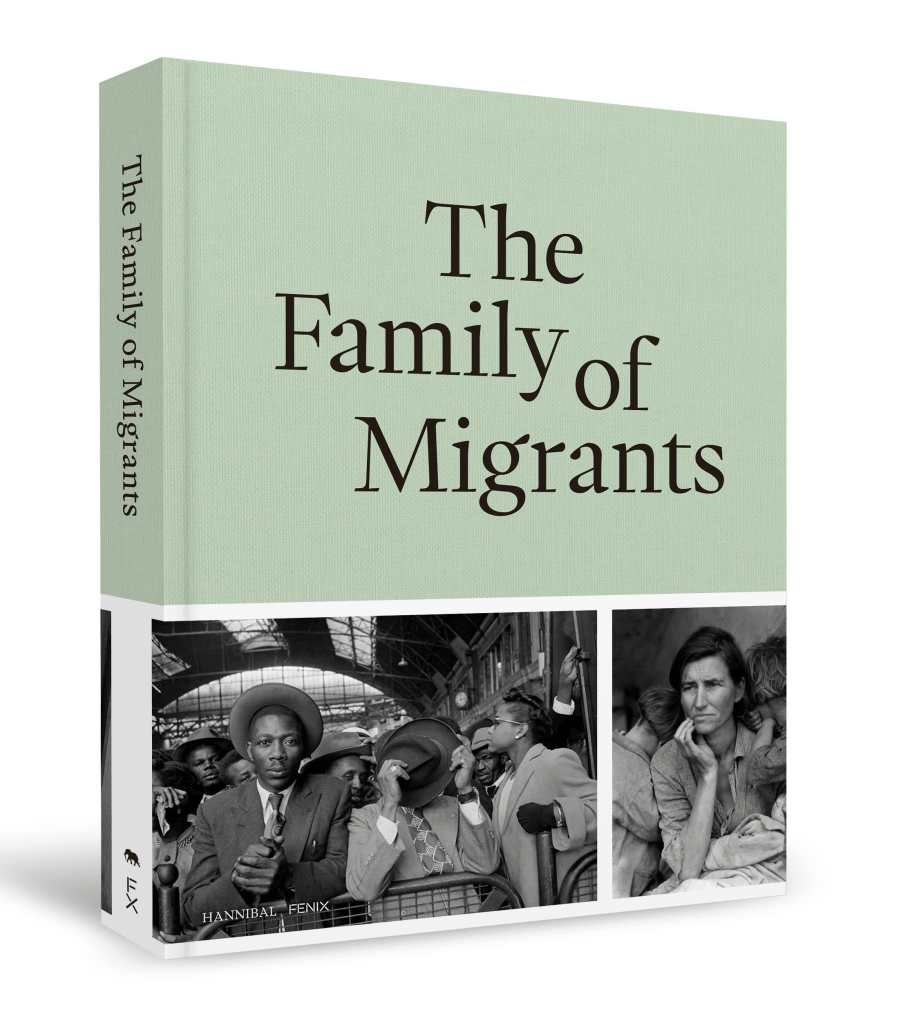
THE FAMILY OF MIGRANTS
A publication by Hannibal Books: https://hannibalbooks.be/en/the-family-of-migrants
Hardcover – 320 pages – 31 × 24 cm
Available in 3 languages.
Dutch edition – ISBN 978 94 6494 155 5
English edition – ISBN 978 94 6494 156 2
French edition – ISBN 978 94 6494 187 6
About Fenix
Fenix is located in a restored historic warehouse, which has been transformed in a radical design by Ma Yansong of MAD Architects, the internationally acclaimed Beijing-based architecture practice. Visitors will immediately see its architectural masterpiece, the Tornado, an organic, dynamic structure evocative of rising air. This double-helix staircase climbs from the ground floor and flows up and out of the rooftop onto a viewing platform hovering above the city. A series of vast gallery spaces across the two floors of the museum will house Fenix’s growing collection, exhibitions, installations and programmes.
The 16,000 sqm building, dating from 1923, was once part of the largest warehouse in the world and served as an important building for storage and shipping for the Holland America Line – a Dutch cargo and passenger line. The Holland America Line facilitated the journeys of millions of migrants in the 19th and 20th centuries who arrived and departed from the surrounding docks. It is the centrepiece of the regeneration of the harbour-side neighbourhood of Katendrecht, which is Rotterdam’s former red light district and the oldest Chinatown of continental Europe.
 Wobneb Magazine