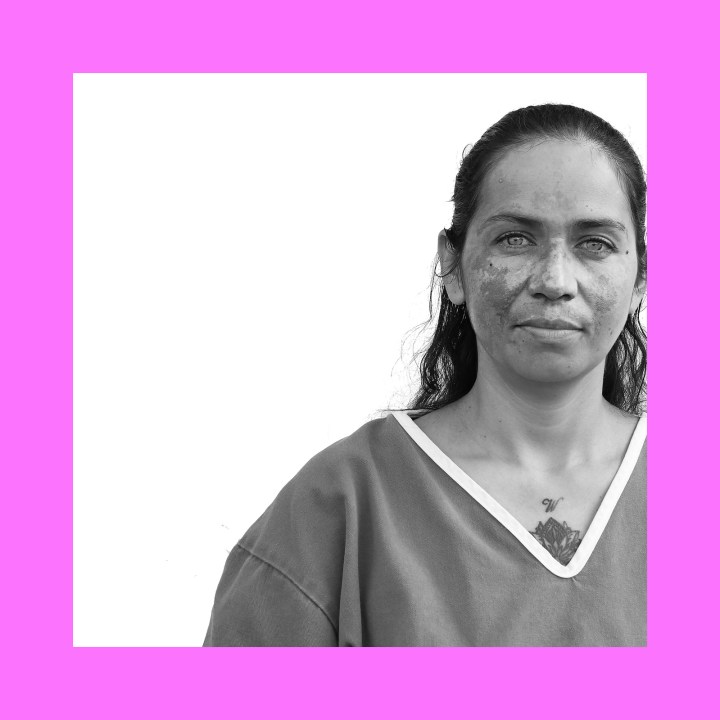
Spain
Age 37
2 years incarcerated to date
Pink flamingo
My grandmother was killed on October 31st—Halloween. I hardly knew my mother because I was raised by my grandmother; I was only two and a half years old. That experience left me traumatized, as it led to me going to live with my mother. But since I didn’t know her, she didn’t feel like my mother to me. I think that’s why my relationship with my mother has always been—and still is—very strange; it’s as if we aren’t mother and daughter. I always remember my grandmother—she was the one who cared for me; she really looked after me and treated me well. I was like her little girl; I was the only female in the family. You know how, when you’re two or three, a specific thing makes an impression and sticks in your memory? My mother always told me that I knew exactly who had killed my grandmother—that the case was solved because of me—because I kept repeating the name of the person who had threatened her. That person was constantly in my nightmares and dreams. Sometimes I look back and think, “I remember my grandmother—I was two and a half.” My mother always says, “You were two and a half; how do you remember?” and I tell her, “I don’t know, it’s just in my mind.” The person who killed my grandmother—that is what is always in my mind. But thanks to that, they were able to solve the case—that was the person who did it. My memories of my grandmother are very beautiful; though there were few of them, I was happy. My nightmare practically began when I went to live with my mother.*
*translated from the original Spanish
The Land of the Free uses portraiture and personal memory to reconsider how we see people living within the American prison system.
Across the history of documentary photography, portraiture is often asked to do more than describe appearance. At its most considered, the portrait becomes a means of restoring complexity to lives that public narratives have simplified, reduced, or misunderstood. The strongest contemporary photo documentary projects continue this tradition by resisting easy conclusions, asking viewers to reconsider not only what they see, but also the assumptions they bring with them.
The work of B. A. Van Sise occupies this uneasy and necessary space.
Van Sise’s featured long-form project, The Land of the Free, draws our attention toward one of the least visible populations in American society: people living within its prison system. Yet rather than centering the crimes that brought them there or the institutions that contain them, Van Sise begins somewhere altogether different. Each portrait is paired with a single, disarmingly simple question to recall their earliest memory. The answers shift the conversation away from guilt, punishment, or innocence and toward something more fundamental; toward a touchstone experience that predates present identity, judgment, and consequence.
This quiet reframing is what gives the work its force. Public conversations surrounding incarceration often rely on abstraction. Individuals become statistics, convictions become identities, and entire lives are compressed into possibly the worst moment a person ever experiences. The Land of the Free resists that compression. Through portraiture and testimony, Van Sise restores a sense of personal history, reminding us that memory exists long before criminal records, and that every life carries a narrative more expansive than the one preserved in court documents or headlines.
There is an ethical question embedded in this approach, one that extends beyond the representation of incarcerated people. Writer and educator Pete Brook has argued that photographic ethics should begin with a simple responsibility to share images in ways that help people “know the world better.” In our voracious image culture increasingly shaped by infotainment, speed and algorithms – all without human intervention – that responsibility becomes more difficult. I would also say it’s more necessary. The question is not simply whether an image is truthful, but whether it encourages a more considered understanding of the people and circumstances it depicts.
Make no mistake, the project does not ask viewers to excuse violence or overlook accountability. Instead, Van Sise asks perhaps the most uncomfortable question of all: who is allowed to remain fully human in our collective viewpoint? The work also presents the difficult question of whether empathy can exist alongside moral complexities. By asking participants to recall the earliest moments they can remember, Van Sise interrupts the instinct to see incarcerated people only through the lens of punishment. What emerges are memories of childhood homes, kitchen tables, first crushes, favorite colors, generational trauma, and ordinary beginnings. Those seminal moments in their personal history, those fragments of memory, remain profoundly familiar even when the lives they belong to have diverged dramatically from many people’s lives.
In this respect, The Land of the Free speaks to a broader question about what contemporary documentary photography is capable of. Rather than functioning or serving primarily as evidence, the photographs become acts of recognition. They challenge portraiture and the long history of photographic documentation and classification, and instead employ it as a vehicle for restoring individuality. The project is built on reconsideration, not revelation.
Van Sise’s background as both photographer and writer is evident throughout the project. Innate instincts of a documentarian and the curiosity of a storyteller allows conversation to shape the photographs rather than predetermined conclusions. The result is neither advocacy nor indictment, but something more enduring: an invitation to confront one of society’s most uncomfortable questions.
If documentary photography has the capacity to expand our understanding of the human condition, it must also ask whether that understanding extends to those we have become most comfortable forgetting.
– Cary Benbow, Editor, Wobneb Magazine
The Land of the Free
I’ve met a lot of really nice people in prison.
Monsters, too. In fact, after two years visiting American prisons, I now wonder (suspect) that incarceration provides a better cross-section of the American personality than almost any other aspect. I’ve visited 37 prisons in 17 states —an unheard-of thing for a lensman— and have met hundreds of prisoners, corrections officers, and wardens, and while their specific ethnic or gender demographics might not reflect the American nation, its personality is our continental mirror.
Prison in America comes from the same impulse that keeps a person from looking at their credit card bill after a spending spree, that leaves those temperamental work emails unread and our school report cards unopened. Prison is how we handle the logic that if you put a problem where you can’t look at it, it ceases to exist.
For the public, a prison’s main purpose is to put the things that trouble us out of sight and out of mind; nobody wants prison to be in the public eye, and if they do, it’s only spoken of by those whose currency is cruelty – people who fantasize about criminals living a sweaty life smashing big rocks into littler rocks, who are quick to condemn but likely wouldn’t welcome a line-by-line accounting of their own sins.
I’ve met 200 or so Americans who, like me, have been in trouble with the law. I meet them unaware of the reasons for their conviction; I go in as ignorant as a mushroom of them, their names, their ethnicities, their origins, or their criminal records. Returning to some Marriott on the side of the highway after a long day in prison, I’ll look up all the people I met in those last dozen hours. Sometimes it’s a news article, but often the first result will be their Facebook page, frozen in time to 15 years ago or even 20, and it’s always, I mean always, filled with comments from hundreds, sometimes thousands, of folks who’ve come to comment on how happy they are that this person has gone to jail. That they hope this young man burns in hell. That they hope this young girl is suffering.
I have been arrested. My mother, too. Both my grandfathers, also, and my great-grandfather, and my great-great-grandfather. Handcuffs are practically our birthright. Like all American families, I come from a long line of ordinary human beings.
The comments section would be disappointed to know that disciplinary action can be multidisciplinary: that we’ve also done other things, too – like many of the prisoners I’ve met, we’ve had jobs, had educations, been in love and been loved, had friends, had families. We’ve done things, we’ve made things with our time. We’ve been exhibited many times. We’ve made three books of photography. We’re, I hear, working on a fourth.
The popular conception of prison comes from fiction – a couple coupla of TV shows. The best ten minutes of ‘The French Dispatch.’ It does not match reality: I’ve been to minimum security prisons, medium security prisons, maximum security prisons. And Death Row. And they, all of them, just feel like high schools one can’t leave. It’s a place where so many Americans – many of whom have done absolutely atrocious things, and quite a great number of which are also complex and often even good people in spite of it – live in exile with their memory.
In Irwin Shaw’s ‘Voices of a Summer’s Day’, he states that “it is only with greatest care that memory can be kept from becoming a prison or a gallows.”And so, with much preamble, here it is: in The Land of the Free, I make portraits of currently incarcerated inmates paired with their verbatim descriptions of their first and earliest memories: whatever they are now, they were once something else; whoever they might be one day, they are more than their worst, unnamed actions.
It is something we all share; even people that are absolutely never humanized can be allowed a little humanizing. We are allowed to confront the taboo of extending compassion to sinners.
The images are paired with the inmates’ birthplaces, ages, years of incarceration to date, color of choice, and their answers to a last, single question: “What is your earliest memory?”
The photographs are bordered with one of the few items allowed to be brought into a maximum security prison: as indicated in the caption, their unique choice out of a 256 color box of Crayola crayons. – B.A Van Sise
(Full captions can be read by scrolling over the thumbnail image. Click on the thumbnail image to view the gallery of full size photographs)
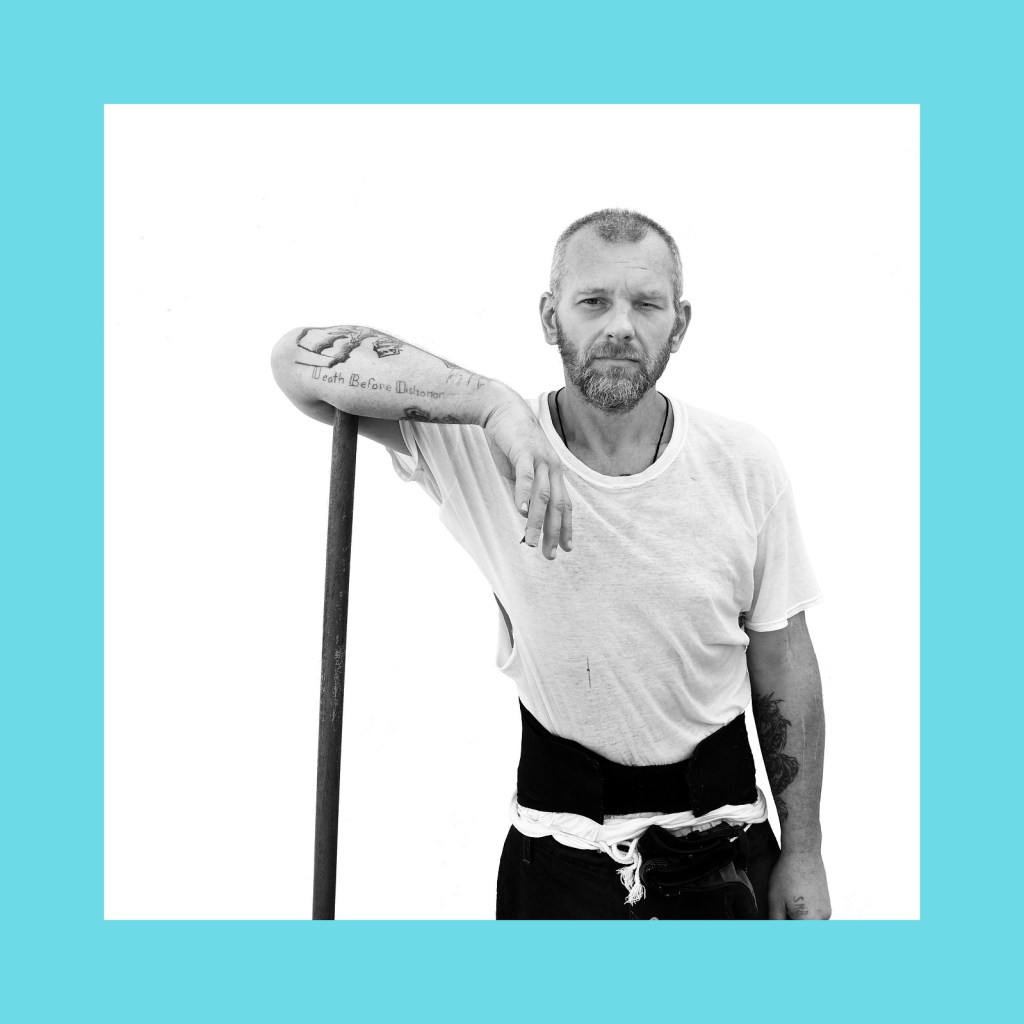
Maryland
Age 44
8 years incarcerated to date
Turquoise blue
Getting smacked with a hot light bulb upside the face.
I went to school the next day and they called the police and they went and arrested my mom’s boyfriend. I was in my room and he wanted me to turn my light out. I was playing with my baseball cards and he came in and ripped up my cards, turned the light out. I turned it back on and he came in and took the light bulb out the lamp and smacked me across my face with it.
He got locked up and that’s when I left from being with my mom. Didn’t want nothing to do with her. I still don’t want nothin’ to do with her.
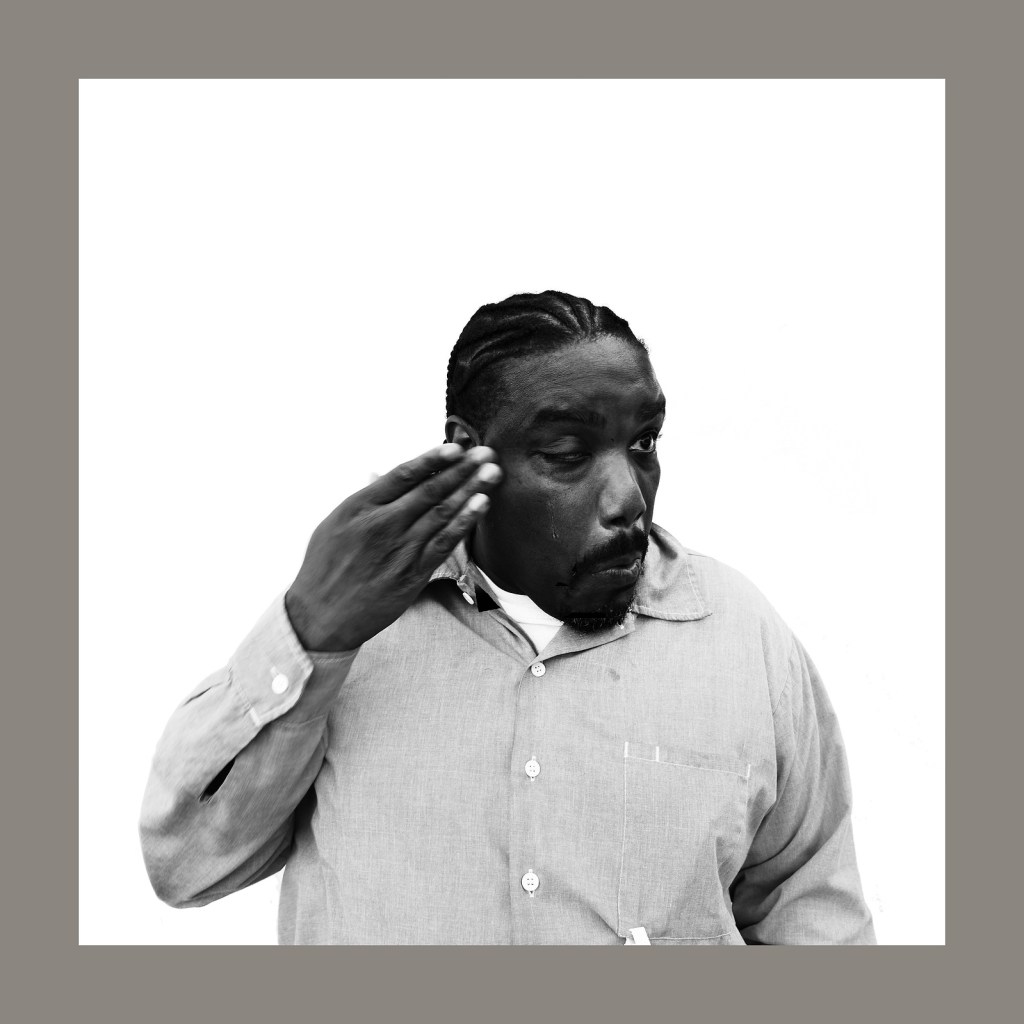
Louisiana
Age 52
8 years incarcerated to date
Gray
I would say that because it’s bad, I’m not talking about it.
Van Sise: That’s alright. Lots of folks have bad memories. That’s fine. We are who we are because of the lives we live.
…Being raped, I think about that all the time, 24-7.
I was maybe 11? Happened 13 times before I was 15. My dad, wife, sisters, I didn’t know how to react, I think truthfully. I was staying in the bathroom, I mean I left physically, but mentally I don’t think I left because I didn’t understand. I spent 47 years beating myself up about it, about a question that I couldn’t answer and that was why. And it took me that long to realize, like, you’re running your life by a situation that’s not for you to answer. And so for 47 years I stood there in the bathroom. [begins crying]
Now you made me do something I didn’t want to do.
Van Sise: Nope, you earned them. You earned them.
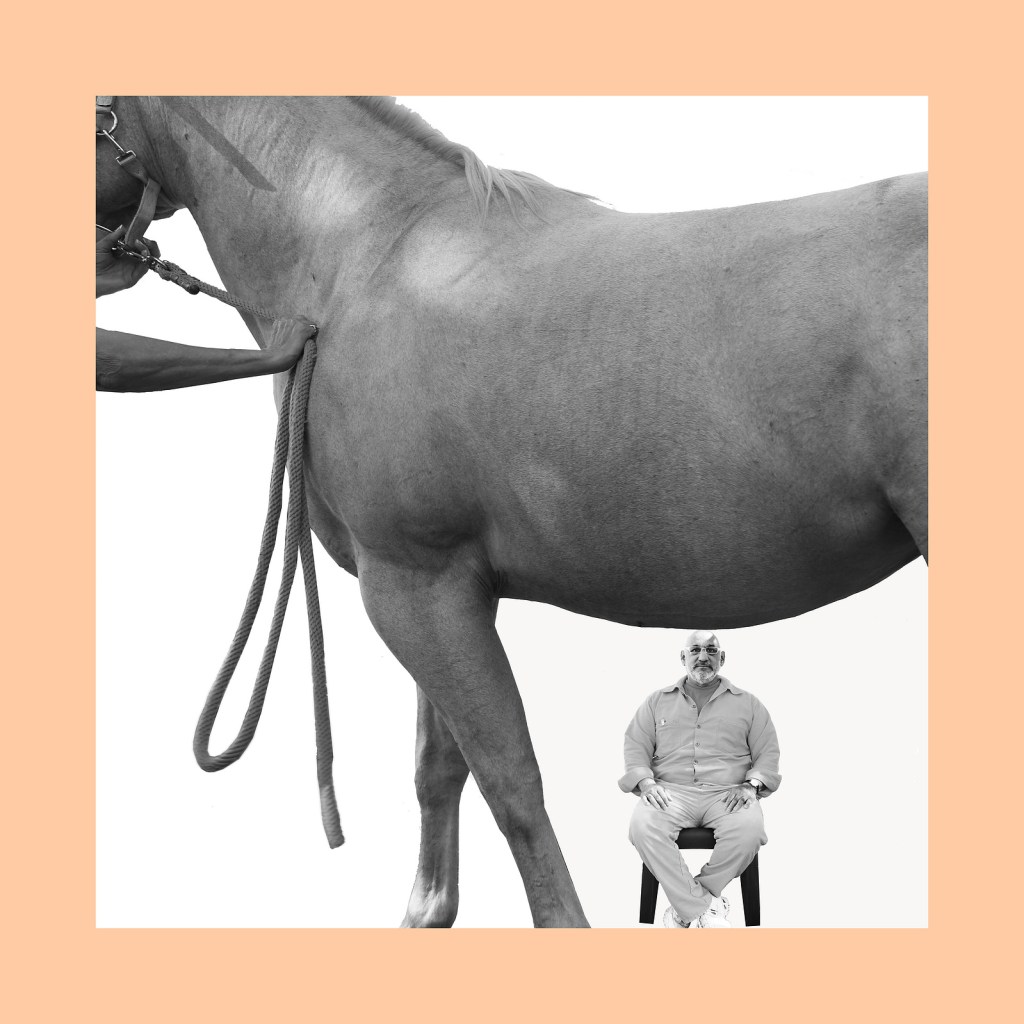
Mexico
Age 54
5 years incarcerated to date
Peach
Working with my grandfather. In Mexico. My first job that I got, I was with him, he was also self-employed, or my family was self-employed.
And one of the first jobs that you get with him is holding the light. That’s my job. He had two dump trucks back then, and always something to do with mechanical and fixing and strain and replacing. So sometimes we work late nights and there you are, holding the light.
And then went on from there to building all sorts of things, including jails. Including this jail.
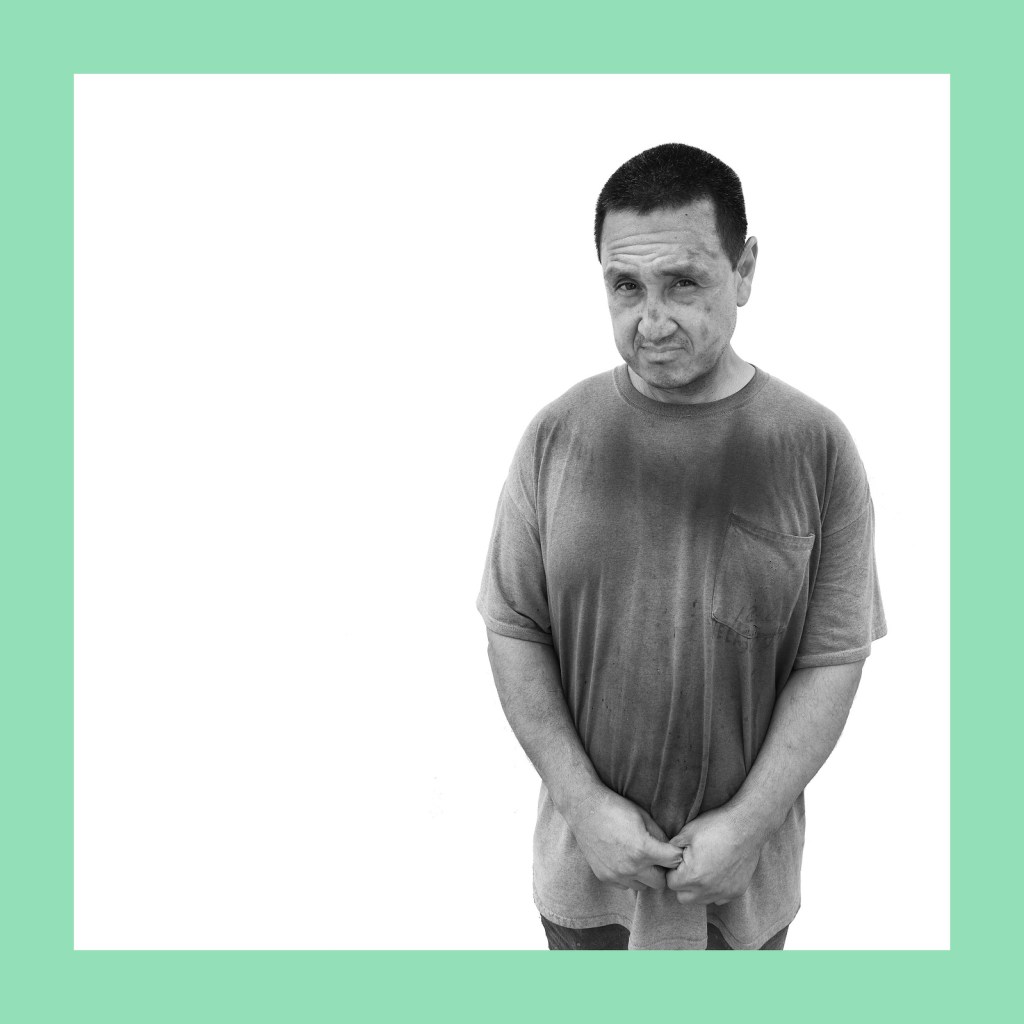
Mexico
Age 45
8 years incarcerated to date
Sea green
It happen to me.
I remember having nightmares. I remember having nightmares.
About people trying to kill me and things like that. I remember I woke up all scared. Yeah. All scared. And I go back to try to wake up my mom and she was like, I’d be like, hey, I’m having a bad dream. She’d be like, it’s okay. She like fucking, she did something to me and then she told me to go back to sleep and that’s it.
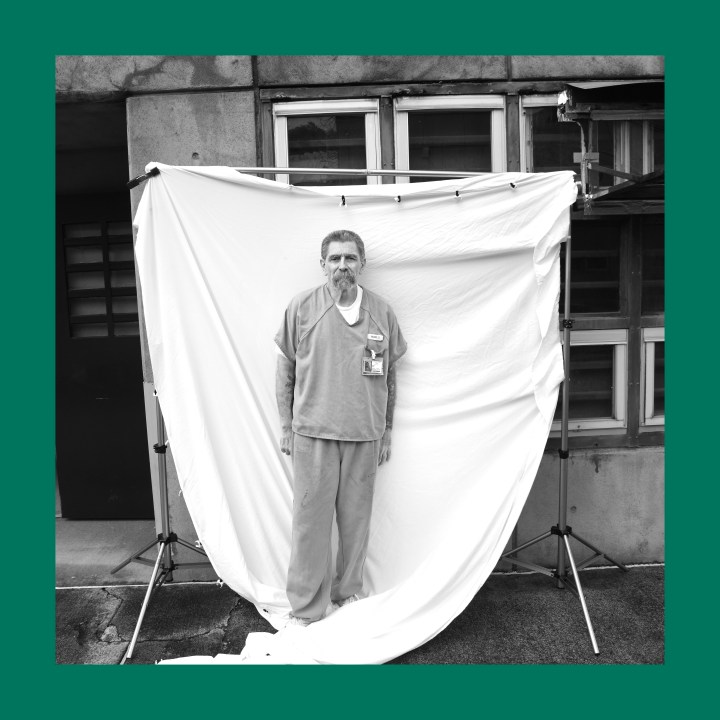
New Mexico
Age 65
42 years incarcerated to date
Tropical Rain Forest
My Mom was working late and we got left, I don’t know, with a babysitter or something. And my younger sister was crying, and I remember getting a gun and the gun discharging by her head. And that was my first bad experience with guns. But my daughter, I mean, my sister, I mean, it scared the hell out of her more than anything else, you know. It scared me. So I didn’t want to mess with guns too much, after that. But it was an experience that’s early in my childhood that I remember.
Needless to say, the guns were locked up afterward. I’m not too much of a gun advocate, to tell you the truth. Although I have one, here and there.
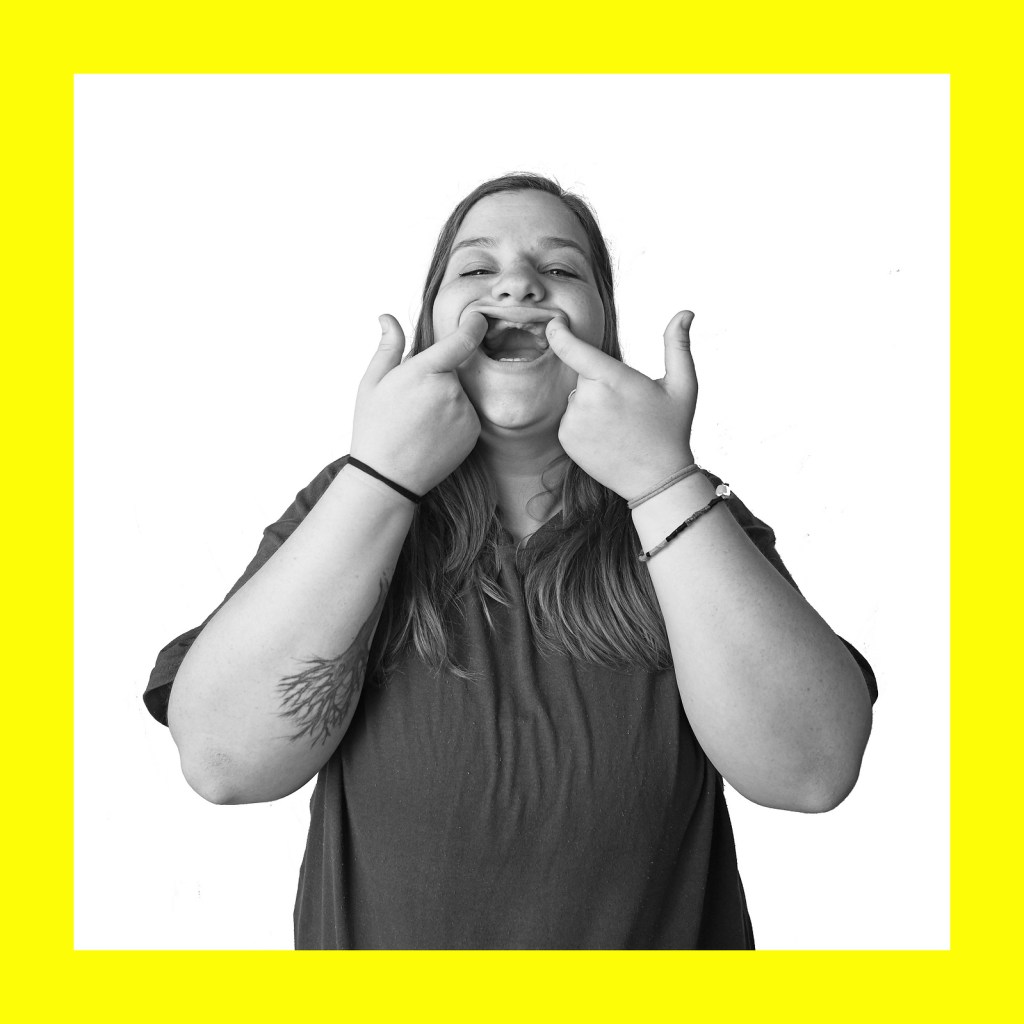
Missouri
Age 27
2 years incarcerated to date
Yellow
You know, I’m picturing the house that we lived in. I know that those are my earliest because I was like three. So we had a dog. I think his name was like Hershey or something, but he was like a brown lab. And then a little two or three step up incline like, inside the house, like the living room, and then there’s two or three steps and a railing to get kind of up to the brothers’ rooms. I have four older brothers, one younger sister, all one big family. I was probably three and I was in a little onesie, like one-piece snap-up, but the dog tripped me on that little two or three step up. I tripped, fell. I just remember when mom came to pick me up out of that situation, one of the snaps, like on the toe, toe footie area was like messed up. So when she unsnapped and I was kind of fighting her on it, because the dog just pushed me and I didn’t, you know, want to change or whatever was happening. I had a rash on my foot from the metal. And then dad got involved saying no, she’s allergic to the metal, but I was more interested in the dog and my little green snap up footie pajama.
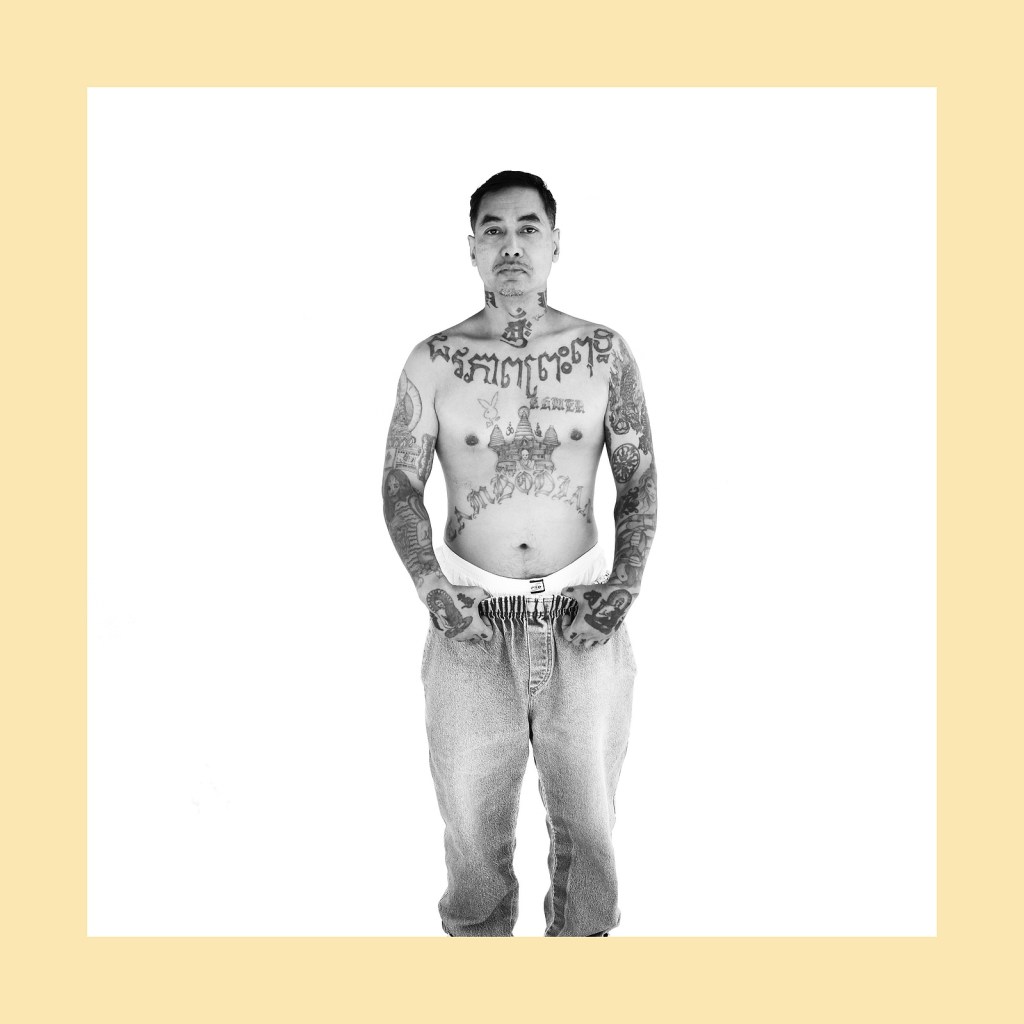
Cambodia
Age 46
31 years incarcerated to date
Banana mania
First thing I remember was just being forced into a fight. Tell me about that. So, there’s one day, you know, my brother’s friends came and was like okay, you know we’re in this new neighborhood or whatever in Lake Superior and in St. Paul, Minnesota And I guess the neighborhood to be able to move around that neighborhood and to have respect I guess you know I would have to you know get into a fight with another kid my age. So I remember being escorted to a crossroad and a bunch of guys standing around in a circle and my side is telling me, hey, go over there and punch on the other kid. I remember standing in front of the other kid not knowing what to do, because I don’t know what’s going on. And then being separated again, and people telling me, don’t kick him in the groin.
So, walked back a second time into the center of the circle before I got a chance to kick the other kid. I got punched in the nose, my nose bleed, and I cried and they stopped the fight. But that was my first experience, and that was my first understanding of being accepted, you know, and then from there, I was able to walk around the neighborhood freely without being harassed and stuff. But I didn’t know what was going on. I was just doing what I was told to do. But, you know, that kind of like, it stuck with me for a while, but then, you know, as you grow older, you know, it just kind of recedes in the back of your mind.
So that was something that, you know, I kind of experienced first.

New Hampshire
Age 31
10 years incarcerated to date
Hot magenta
Well, I had a lot of trauma growing up, so… well, there’s a lot that I don’t remember. I think my trauma response was to like, wipe it out. I do remember when I was about five years old, my parents brought my sister and I to the beach and my parents, like, I said have always been like slackers so they’re really submissive, they didn’t care. We could just go wherever for like weeks on end and they just wouldn’t care. So I went out into the ocean and she told me don’t go far. And you know, I swear that I didn’t go that far. I thought that I was like right in front, But next thing I know after I’m done playing, I look around and I can… I thought that I was like right in front, but next thing I know, after I’m done playing, I look around and I can’t find anybody that I know. And so I end up walking around the beach for hours and nobody comes and finds me. So I eventually am crying and I go to the lifeguard and I ask him to help me find my family. And he eventually you know finds them for me and my mom was like oh I knew where you were the whole time. I’m like no you didn’t. Like clearly I’ve been walking around for hours and you know but I bring it up to her like every now and again she always say the same thing she’s like I didn’t lose you I knew exactly where you were like and in my mind it’s like thinking of like a Joe Dirt moment you seen that movie so it’s like his parents will leave him next to the garbage can or whatever and they just take off so like that’s what I’m thinking and I don’t know even my grandmother knows that she’s like yeah we lost you for like a couple hours and I’m like how do you even do that how do you lose a five-year-old for like four hours and not freak out and only notice when the lifeguard comes and brings me up to you so I’m like this is great.
Van Sise: And that’s your earliest. You said memories before that are totally gone?
No, it’s not totally gone. So, my grandmother’s boyfriend was the first person that I was sexually abused by at an early age. About five or six. And it lasted until I was about 12. He told me that I couldn’t tell anybody, and my grandmother was so happy with him. And so I didn’t tell anybody for the. you know, for the longest time and they lived together so I would always just try to like be away from them, but my grandmother would always be like oh come over come over and then so I felt bad because I wanted to spend time with her so I would like go over and he would like try to like buy my love. Like he would literally buy me whatever I wanted and you know treat me like I was the favorite child. But nobody ever realized what was going on.
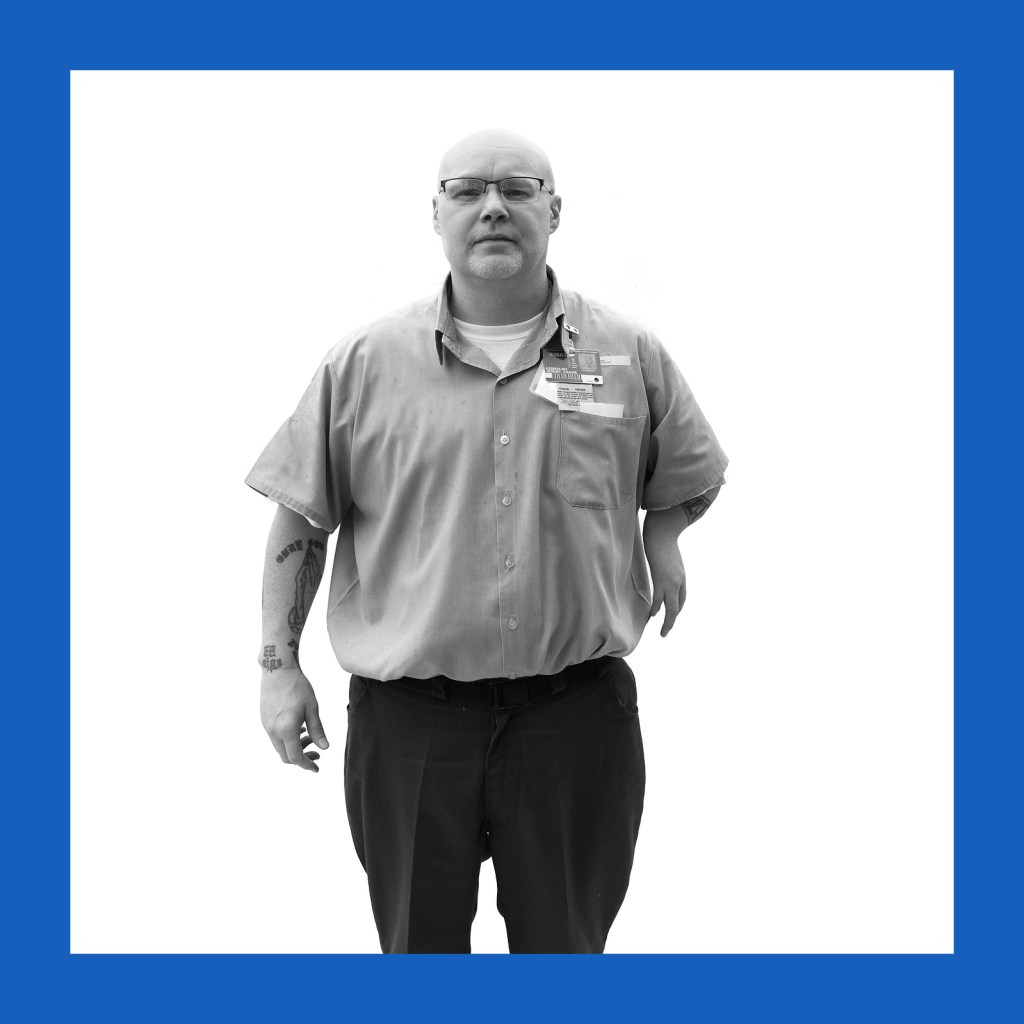
Ohio
Age 45
29 years incarcerated to date
Denim
Wow. I remember the first Christmas that we ever celebrated, because my dad’s Native American. He’s full-blooded Native American, and my mom’s white. So my father didn’t celebrate holidays. So I remember they had a show that used to come out back in the 80s called the Knight Rider and I remember I got the K.I.T.T. car with the little man of Michael Knight and you put the batteries in it and press the license plate in the red thing came on the kit car but that’s like one of my earliest memories as a child. That and a big wheel I had. And my older sister and brother tored the big wheel up sliding on it. Because they were too big to ride it.
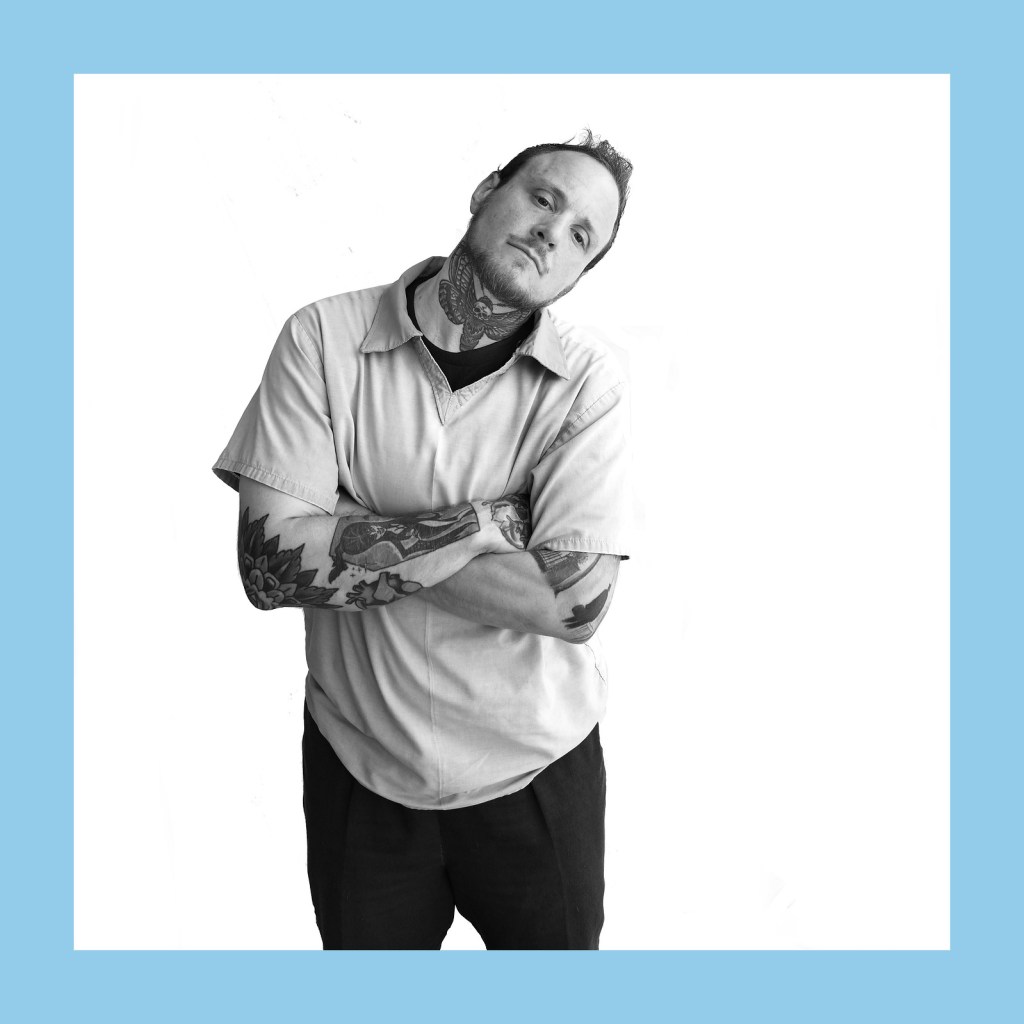
Ohio
Age 35
2 years incarcerated to date
Cornflower
My, my mom, uh, was laying on her back and my dad was on top of her, uh, choking her.
Um, and I, uh, can remember being in the hallway watching it because I was yelled at to go to my room prior. My sister had just moved out. My sister was always the blockade of that. You know what I mean? 10 years older, the typical I’ll cover your ears bullshit, that whole sad story. But that, she was no longer there. My dad was on top of my mom, this is a six foot four man, 260 pounds on top of a 140 pound, maybe 120 pound woman, choking her, and I remember getting on his back.
I have one of these little like fishing gaming toys, and I’m pounding his back as hard as I can. And knowing in my mind at 10 years old, what the fuck am I actually going to be able to do to a six foot tall man? He stands up, I fall off his back like I’m paper to him. And I can remember him saying later look what you’ve got my kid doing to me. Look what you’ve got. And I can remember later my mom going, you saved my life that night.
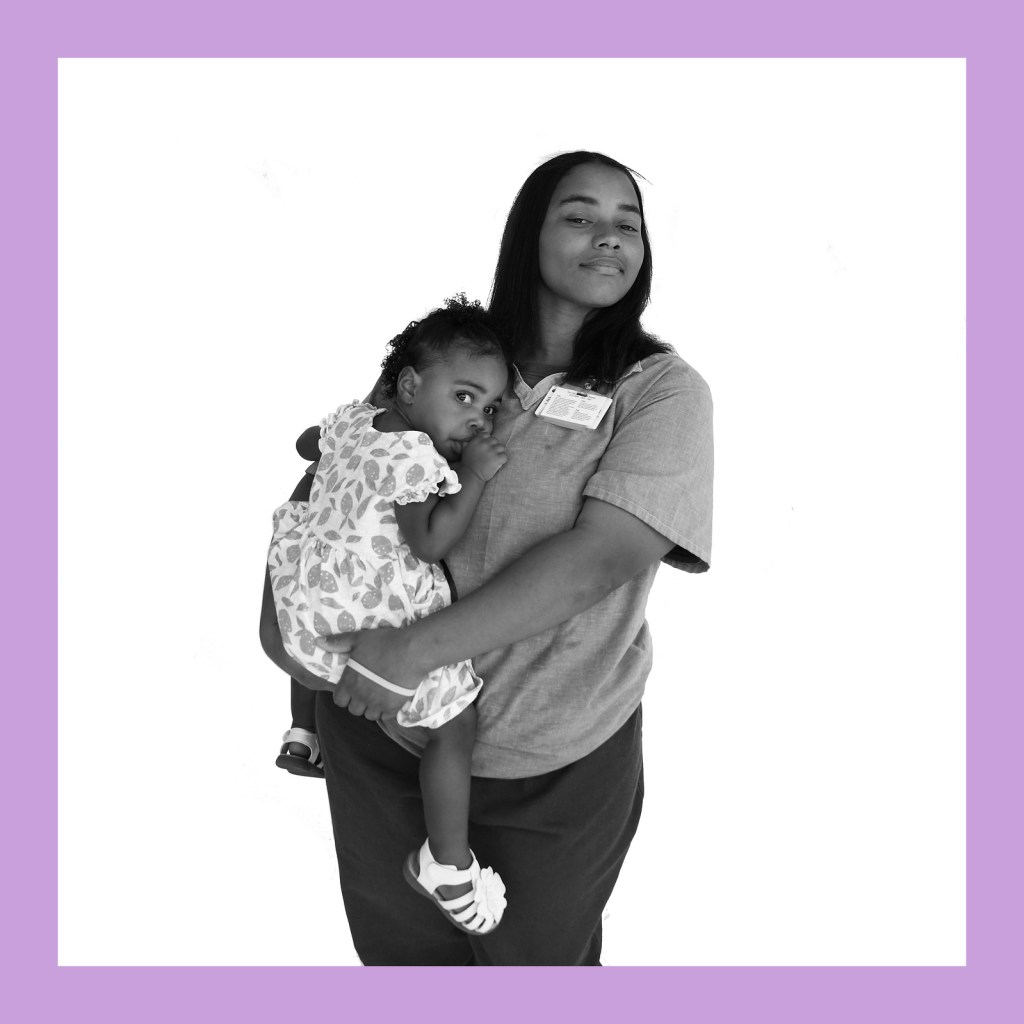
with daughter Ava
West Virginia
Age 21 | Age 1
2.5 years incarcerated to date | born in prison
Wisteria
It would be probably when I was between the ages of four and seven when my mom was selling me for drugs. So I was… my dad originally had custody of us when we was living in West Virginia, and my mom took my brother out so my dad didn’t know that we kids were gone. He called the police and told them like she took my kids, you know. But it was that she didn’t have custody of us. So they said that there was nothing that they can do because she had custody, too. She hadn’t been denied custody or visitation or anything like that.
So she brought us to Ohio, Chillicothe. And to support her habit, she just let different men do whatever they wanted to me. For drugs or money. From the ages from four to seven. So I was with her for those couple of years and lived through that the whole time. She ended up taking us back to our dad because my brother was just emotionally… not… yeah… like… and she, I think she could tell what it was doing to me, too. So I don’t know, either kindness of her heart or whatever you might want to call it, she just decided to take us back to our dad. What was really rough was she only fed us like once a day a chicken sandwich from McDonald’s.
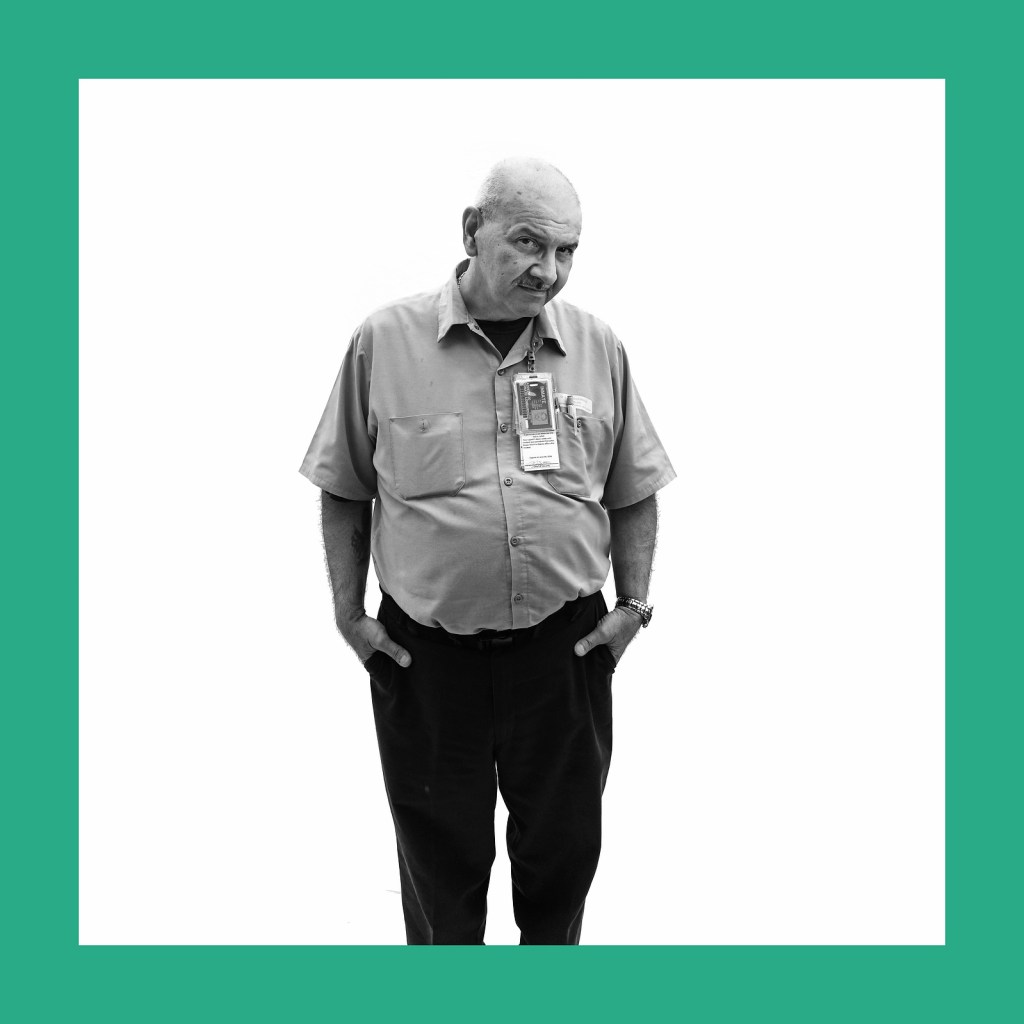
Venezuela
Age 64
37 years incarcerated to date
Tropical green
When I committed my first little robbery. Mm-hmm. I was not yet five. So I was in South America, I was getting ready to go to school. I went next door to pick up my friend, his mom says hold on, he’s getting ready so I was right down the porch and their little baby was in the playpen, right, because it’s so warm there, and it was jingling mom’s purse. I hear change money.
So I go there and I tricked the little baby and give him a toy. It gives me the purse, I give me a handful of change, put it in my pocket, give him the thing back. My friend comes out, we go down down the street- instead of going to school, we go across the street to the store. I’m buying candy like it was going out of style, mm-hmm, you know? It’s in the neighborhood, so they knew my mom, my dad, mm-hmm. Comes my mother, she says what are you doing?
I’m like, oh my God. She said, I’m going to tell your father. So my dad came home and beat the crap out of me. And so did I learn a lesson? Absolutely not. So there was more, there was more. I set a car on fire later on in that year, accidentally, you know, you get a match… he had, because he was a butcher for this factory had
and delivered meats in large, medium, and small paper bags and I was in this car playing with matches. I like to light it and put it out. I got out of control.
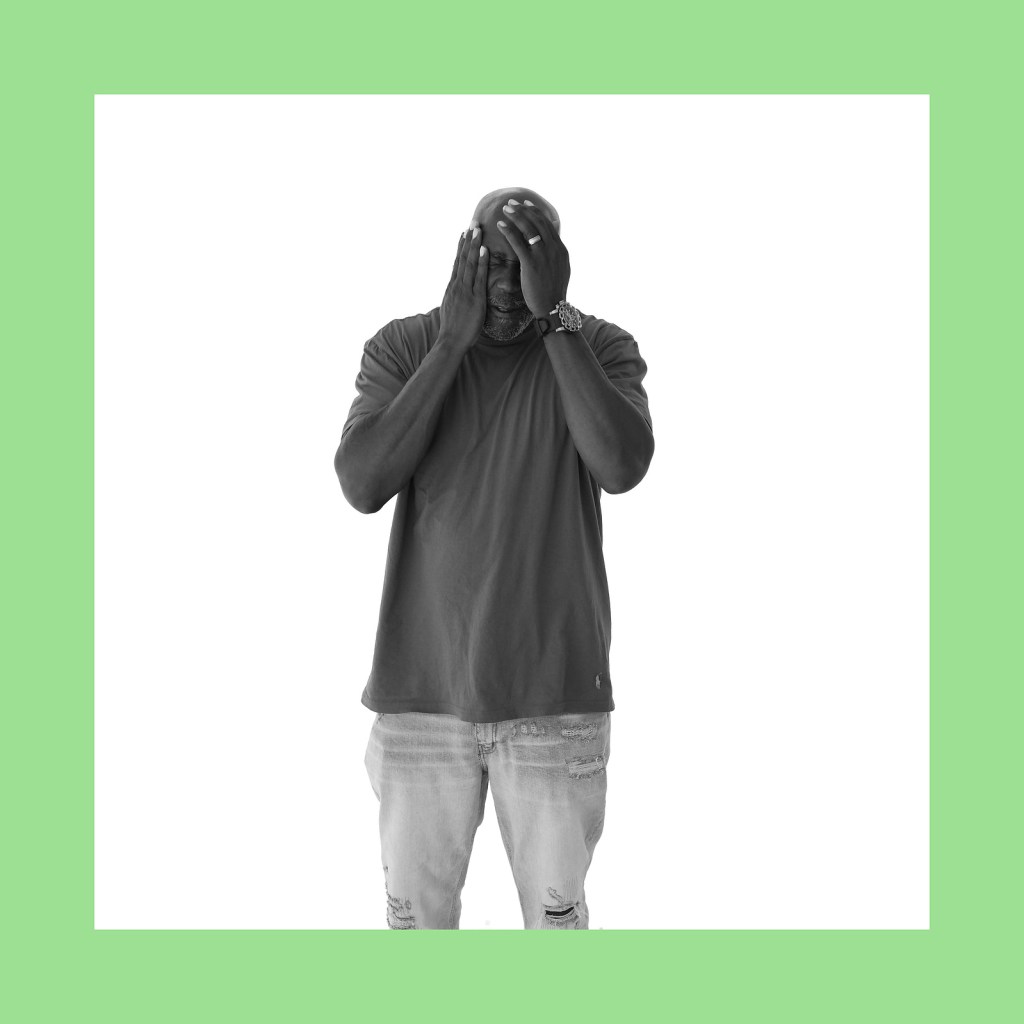
Louisiana
Age 46
25 years incarcerated to date
Granny Smith Apple
Me being burnt on the furnace, jumping over the furnace with my sisters and cousin, and me being clumsy enough to fall on the float furnace and I got a permanent mark on my leg.
It’s a grid too.
I was I think about four, five, something like that. But I was playing around? Following them. As a kid, you’re thinking that’s cool, what they’re doing. They was older than me.
I was rushed to the hospital. They cleaned it and made it greasy.
Alright, we gotta go take the picture now. I can feel the storm coming and not just the wind. I can feel the storm coming. I can feel the storm coming. I can feel the storm coming.
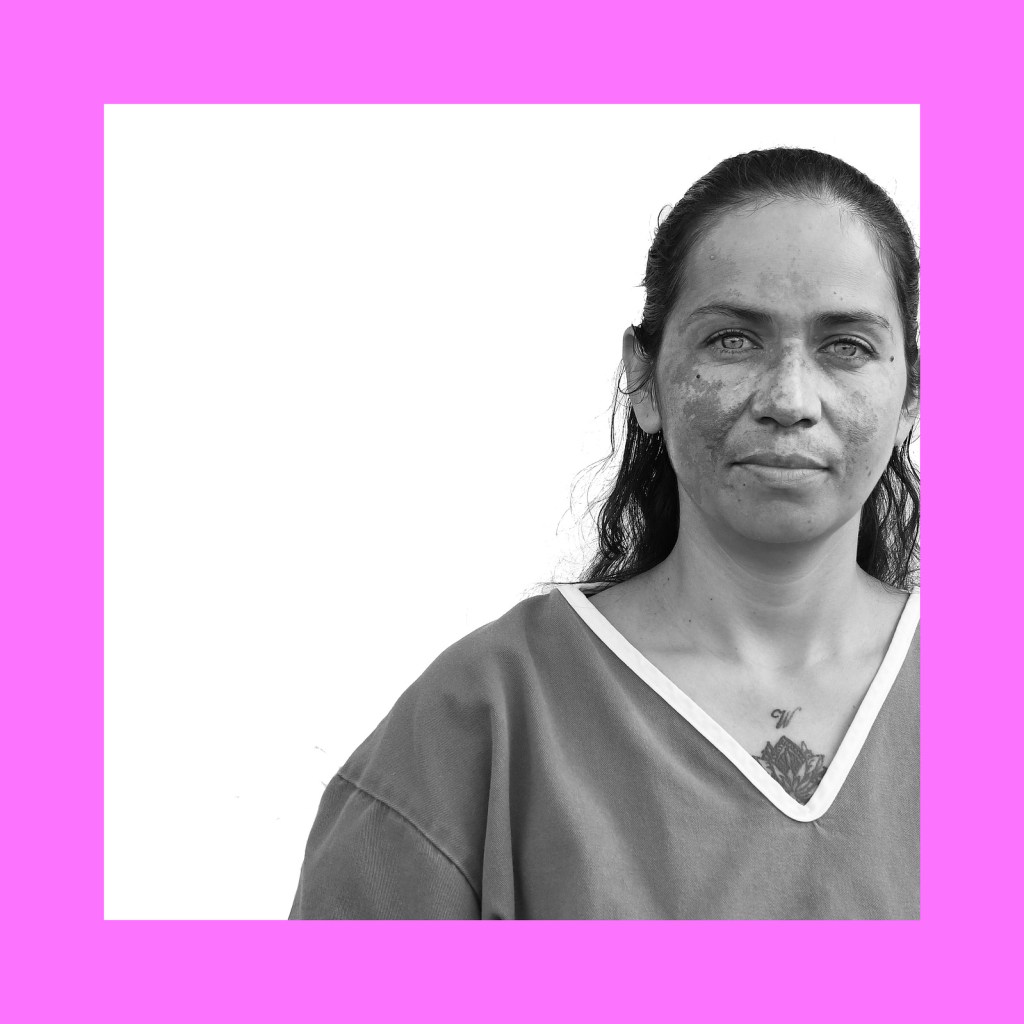
Spain
Age 37
2 years incarcerated to date
Pink flamingo
My grandmother was killed on October 31st—Halloween. I hardly knew my mother because I was raised by my grandmother; I was only two and a half years old. That experience left me traumatized, as it led to me going to live with my mother. But since I didn’t know her, she didn’t feel like my mother to me. I think that’s why my relationship with my mother has always been—and still is—very strange; it’s as if we aren’t mother and daughter. I always remember my grandmother—she was the one who cared for me; she really looked after me and treated me well. I was like her little girl; I was the only female in the family. You know how, when you’re two or three, a specific thing makes an impression and sticks in your memory? My mother always told me that I knew exactly who had killed my grandmother—that the case was solved because of me—because I kept repeating the name of the person who had threatened her. That person was constantly in my nightmares and dreams. Sometimes I look back and think, “I remember my grandmother—I was two and a half.” My mother always says, “You were two and a half; how do you remember?” and I tell her, “I don’t know, it’s just in my mind.” The person who killed my grandmother—that is what is always in my mind. But thanks to that, they were able to solve the case—that was the person who did it. My memories of my grandmother are very beautiful; though there were few of them, I was happy. My nightmare practically began when I went to live with my mother.
*translated from the original Spanish
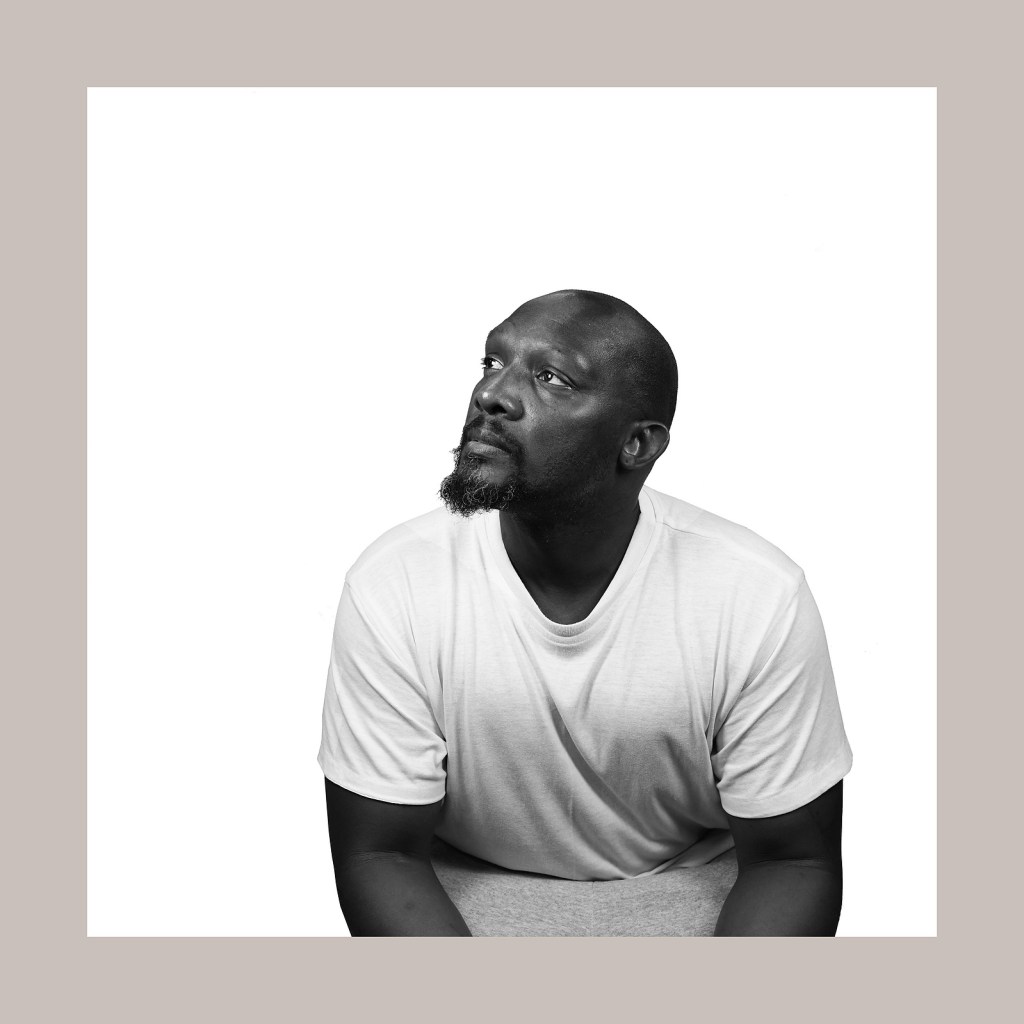
Wyoming
Age 46
10 years incarcerated to date
Silver
Planting strawberries in my grandpa’s garden. In Casper, Wyoming. And we lived on Jefferson Street.
We’re at dusk. It is summertime. We’re in the backyard and the sun’s going down. It was like yellow sky, yellow and blue, you know, just how it’s fading in. The house is yellow, brown trim. There is a, I’m gonna say like a Ford Bronco in the driveway, the silver one, Dodge Ram. Actually, so it’s not Ford, it’s Dodge Ram Bronco. And I remember that. It was so, it was cool.
My grandpa worked at Watco, so he had on his jeans with stains on and this like, you know, like the mechanic shirt, you know, so he had like that on. And my grandpa’s white, by the way. So it was just him out in the garden, let me show you how to do this. Took a shovel and we had to turn over the soil, turn it all over. And I was trying to do it. And he was like, you don’t weigh enough to do it, you have to jump.
So I had to grab the shovel with both hands and jump up and down to get, to go down and then I’m leaning on it to pry it up to get it to come up and then we did that and then we watered the soil and then he was like all right now we’re going to take this and we’re going to plant it in there and it was the cups of the strawberries- so they’re already seeded, you know, and we’re spreading the soil going down three inches and pushing it in and put it back over. He’s like, all right, so now four weeks we’re going to have strawberries. Don’t eat them all. And I remember watching them turn white, you know, the strawberries are white, like a mint green really, before they even become red strawberries as we remember them and eat them and know them.
Bio
B.A. Van Sise is an author, journalist, and photographic artist with three monographs: the visual poetry anthology Children of Grass: A Portrait of American Poetry, Invited to Life: After the Holocaust, and On the National Language: The Poetry of America’s Endangered Tongues.
He has previously been featured in solo exhibitions at the Center for Creative Photography, the Skirball Cultural Center, the Woody Guthrie Center, and the Rockefeller Arts Center, as well as in group exhibitions at the Peabody Essex Museum, the Museum of Photographic Arts, the Los Angeles Center of Photography and the Whitney Museum of American Art. A number of his portraits of American poets are in the permanent collection of the Smithsonian’s National Portrait Gallery.
In photography he has been a finalist for the Meitar Award for Excellence in Photography, and is a Phillip and Edith Leonian Foundation grant recipient, a two time Prix de la Photographie Paris award-winner, a New York State Council on the Arts/New York Foundation for the Arts Fellow in Photography, and winner of the International Academy of Digital Arts and Sciences’ Anthem Awards for Diversity, Equity, and Inclusion. For nonfiction he has been a finalist for the Travel Media Awards for feature writing, named a life Fellow of the Royal Geographic Society, and is a winner of both the Lascaux Prize for Nonfiction and the INDIES Book of the Year, and for poetry he has been a finalist for the Rattle Poetry Prize and a winner of the Colonel Darron L. Wright Memorial Writing Awards. He is a two-time winner of the Independent Book Publishers Awards gold medal: once for History and once for Poetry.
::
Website https://bavansise.format.com/
Portfolio – The Land of the Free
Instagram – @b.a.vansise
The ongoing series of features and posts on the significance of documentary photographers and photojournalists can be found at Wobneb Magazine.

