A long-form photographic study of ritual, community, and the quiet moments that define a centuries-old English tradition.
The most enduring documentary projects often begin with a simple realization: the obvious picture is rarely the most revealing one. Perhaps more poignantly in King’s project, communities often reveal themselves most clearly through the traditions they refuse to abandon.
While spectacle naturally draws the eye, it is frequently the quieter moments surrounding an event like the anticipatory wait before it begins, the expressions of anticipation, the gestures exchanged after its conclusion. These moments offer a deeper understanding of the people who gather there. For photographers committed to long-form observation, the periphery can become the real subject.
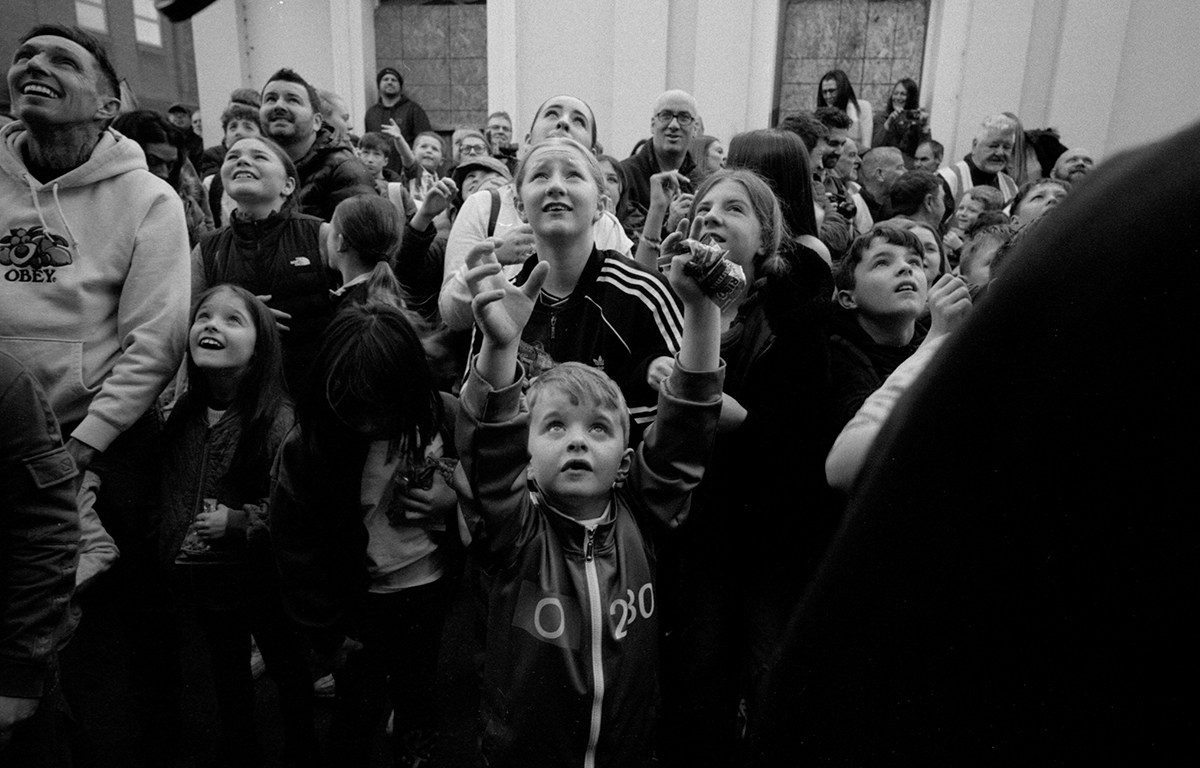
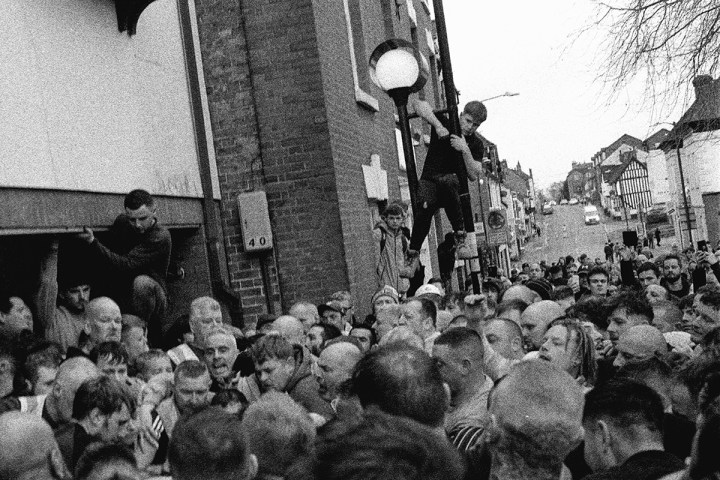
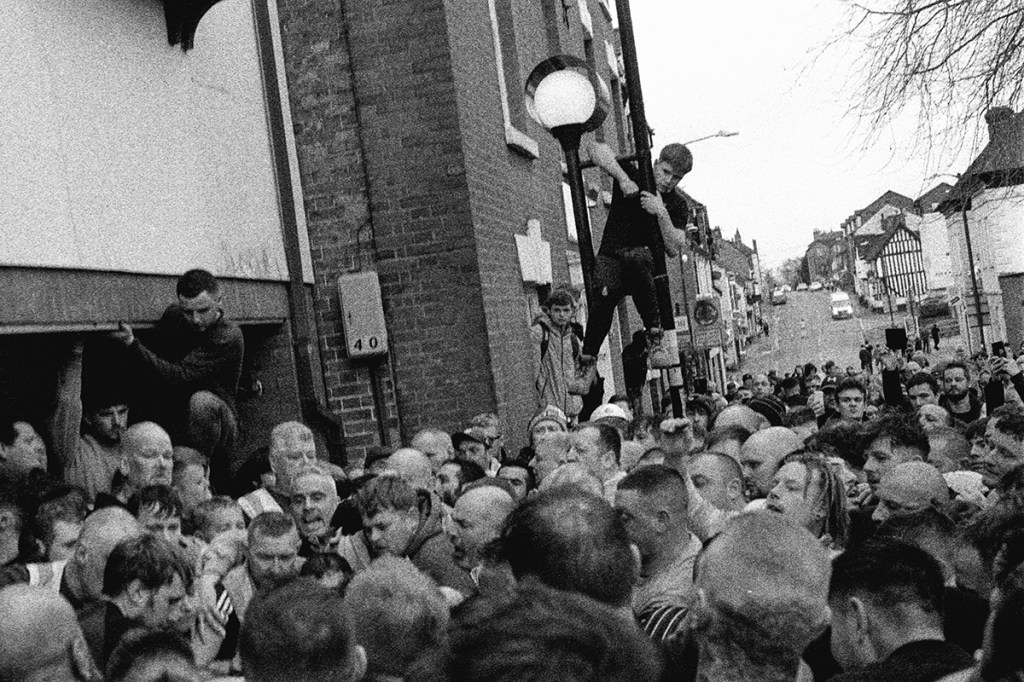
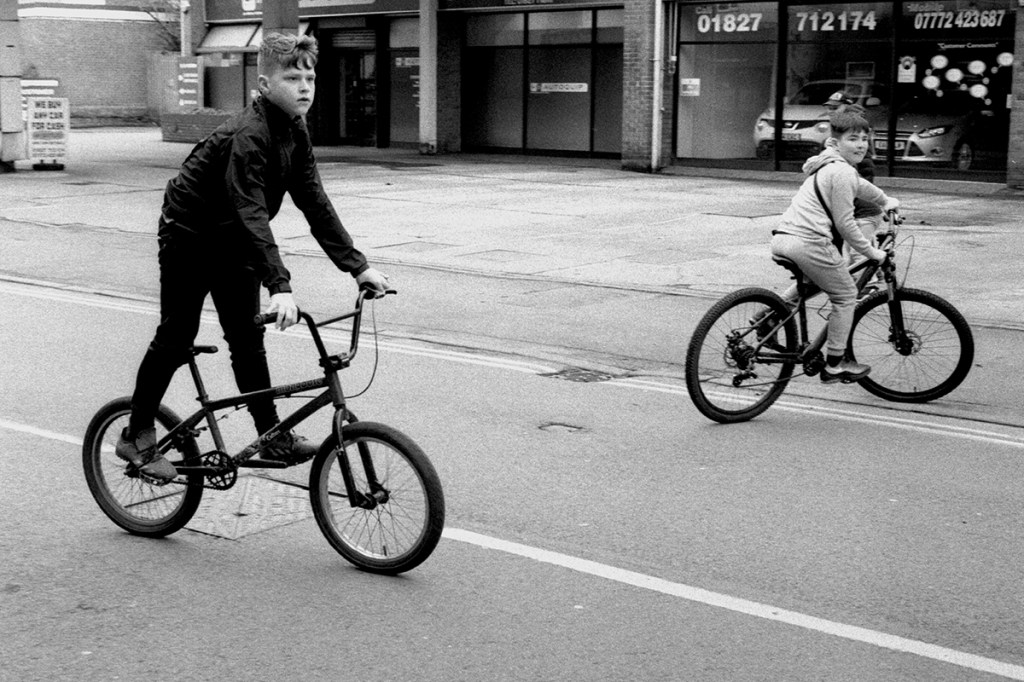
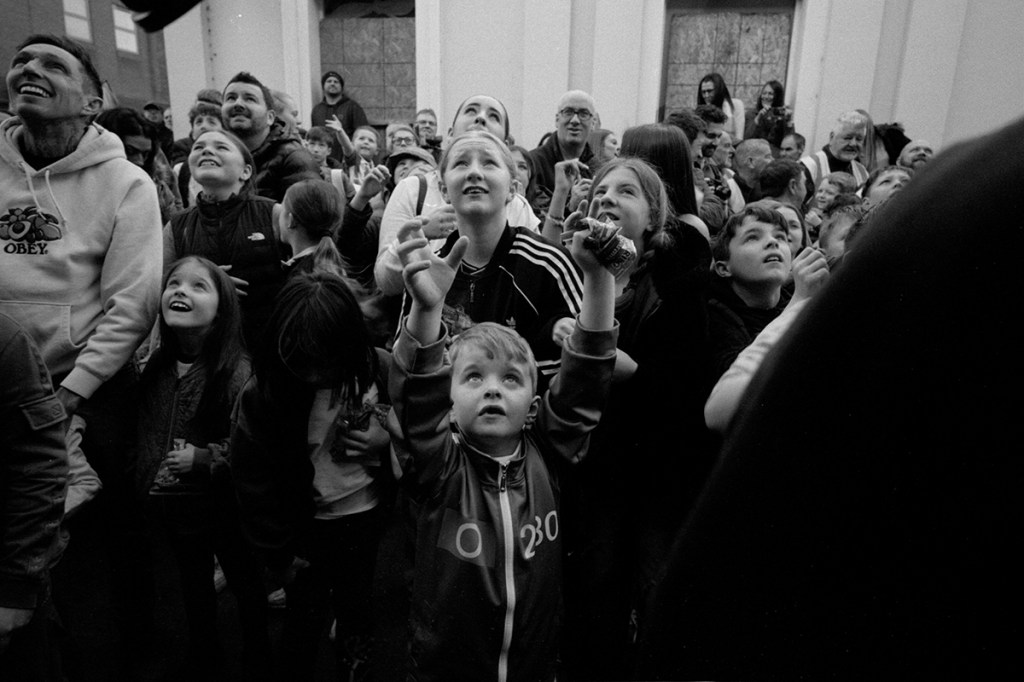
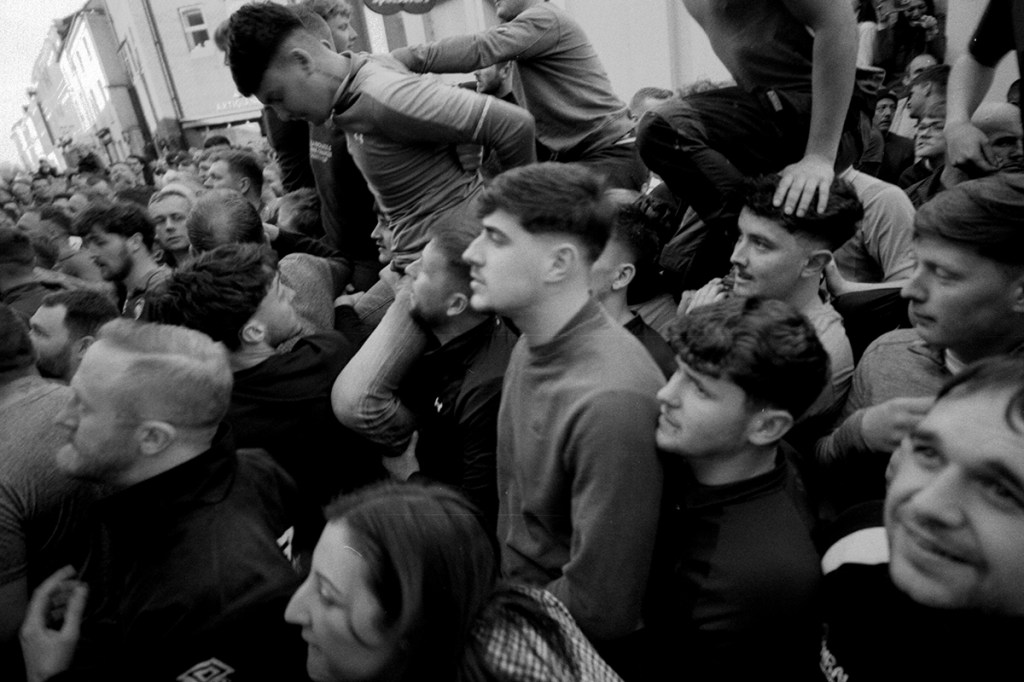
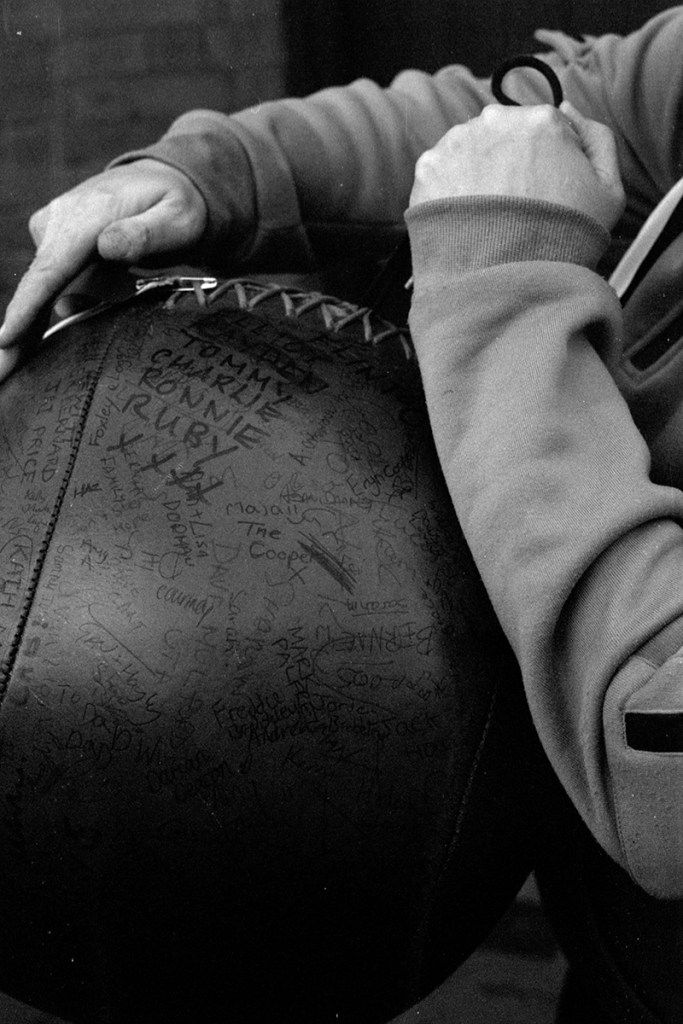
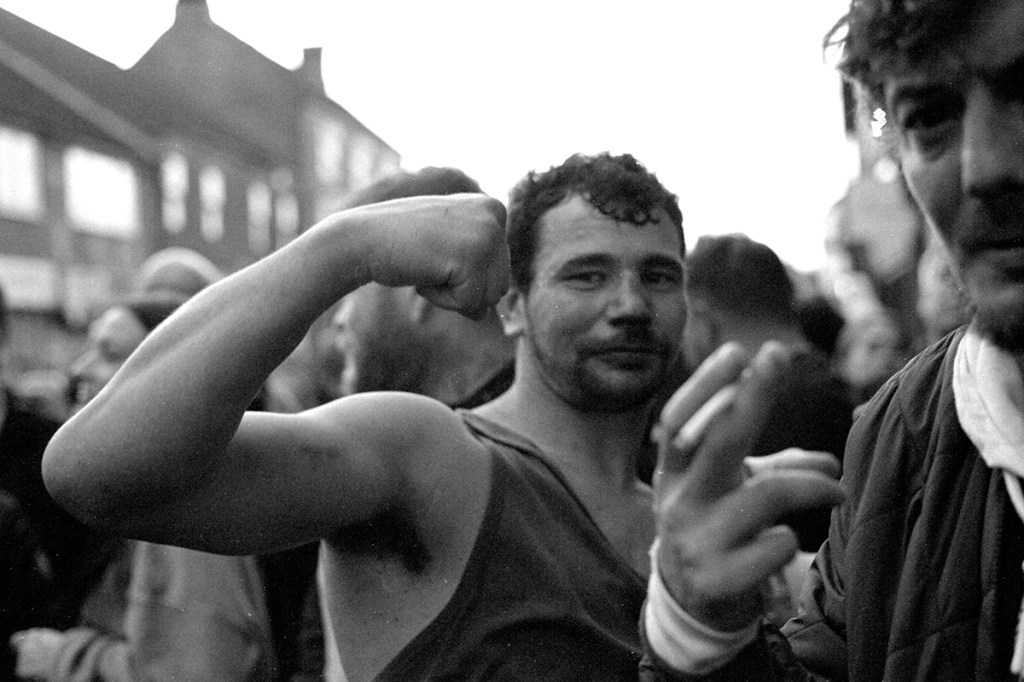
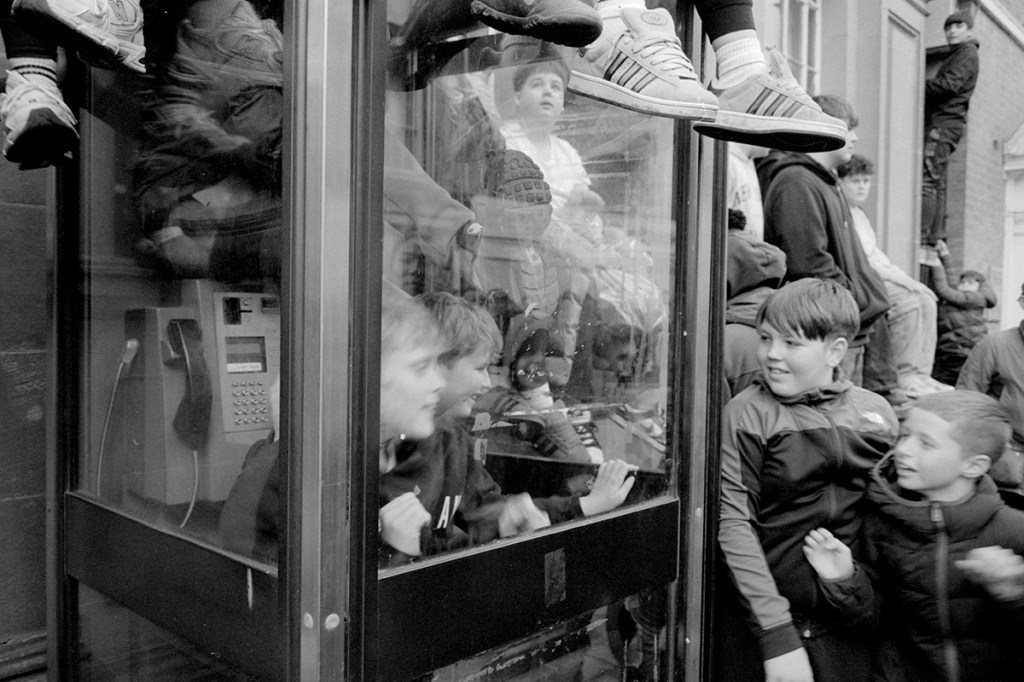
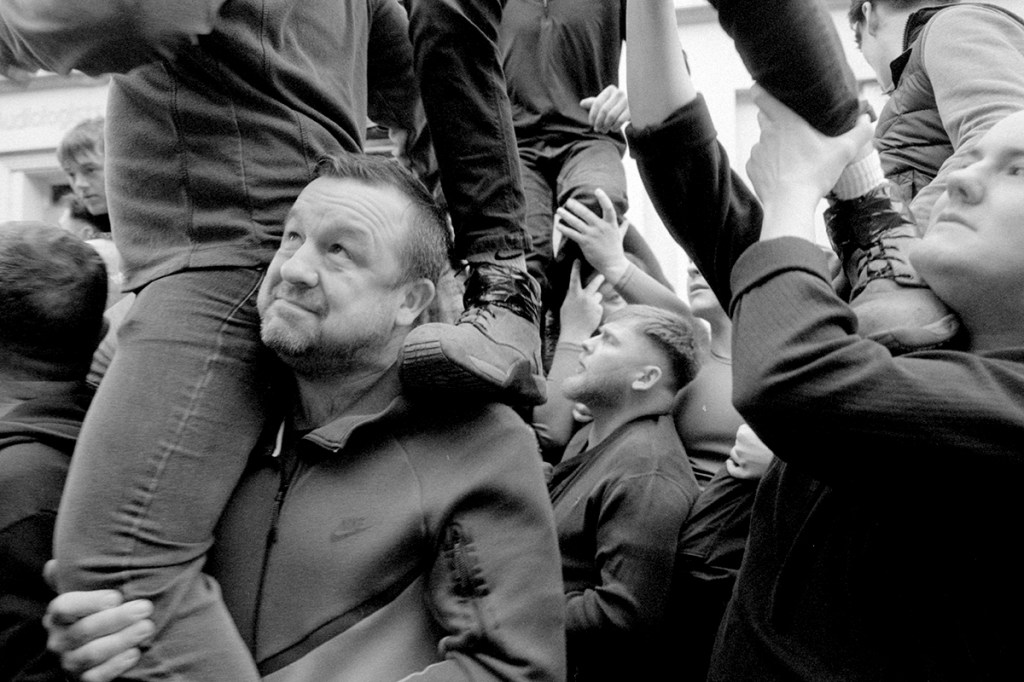
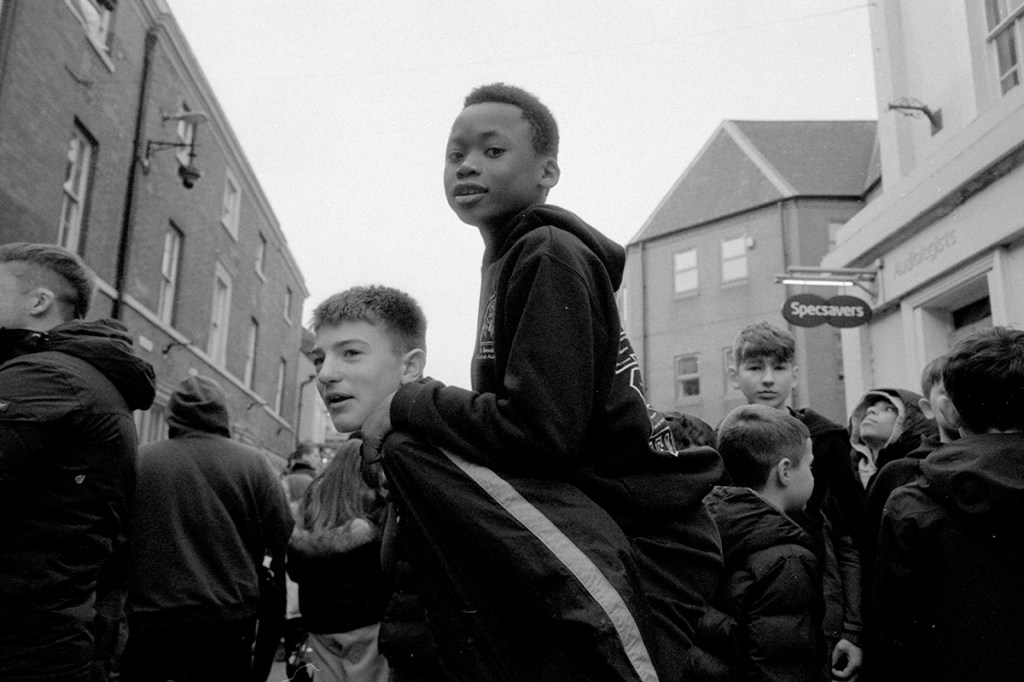
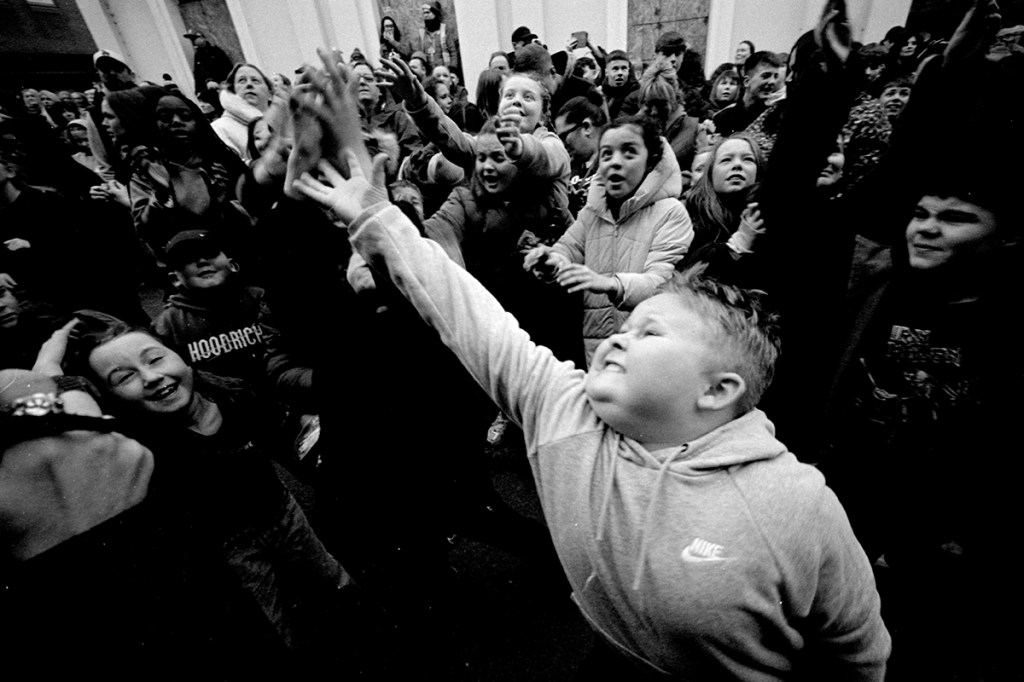
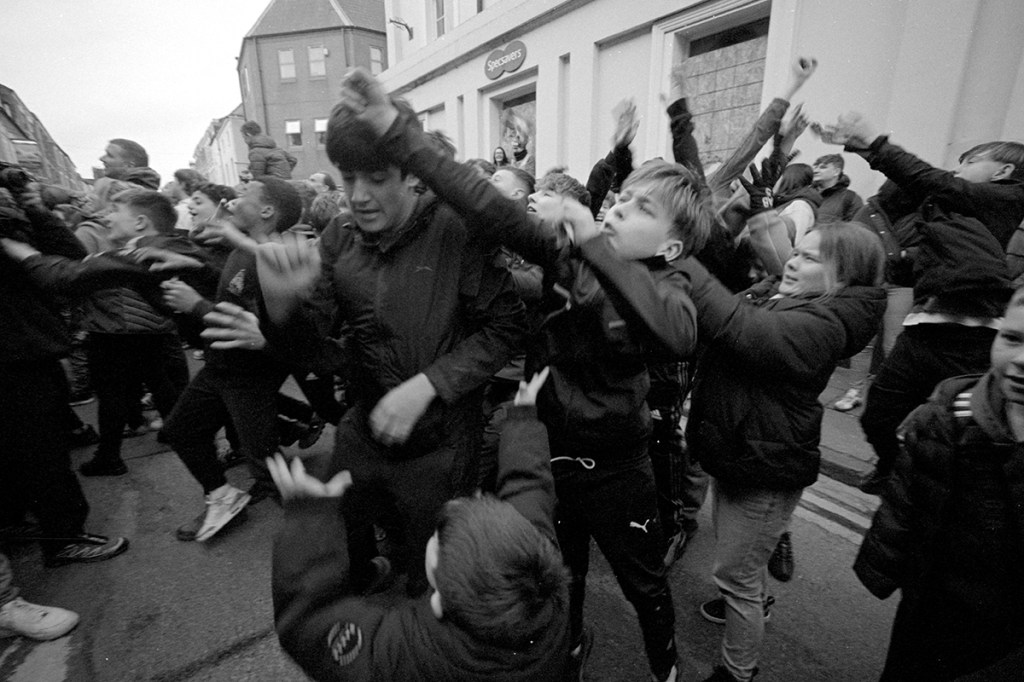
The work of Simon King embraces this principle with noted restraint. Over several years, King has returned to the historic Atherstone Ball Game, an annual tradition in the English Midlands often described as one of Britain’s most physically demanding community sporting events. Rather than attempting to define the event through its central melee, he turns his attention toward everything surrounding it: the anticipation before the ball is thrown, the anxious spectators pressed against shopfronts, fleeting encounters between participants, and the celebrations that follow when the game finally ends.
This shift in perspective transforms the project from a document of spectacle into a study of place. King’s photographs reveal a town temporarily reorganized around ritual, where public streets become stages for collective memory and generations participate in a tradition whose meaning extends well beyond competition. The game itself remains present sometimes only as an implied force beyond the edge of the frame, but its influence can be felt in every portrait, gathering, and quiet interval.
Working exclusively in black-and-white film, King resists the visual excess that such an event might invite. His photographs rely instead on observation, rhythm, and accumulated experience. Returning year after year, he allows familiarity to shape his approach, refining not only what he photographs, but how he sees. The resulting body of work reflects a central strength of long-form documentary practice: the understanding that repetition is not redundancy, but an opportunity to deepen one’s relationship with both subject and place.
Within the broader context of contemporary documentary photography, King’s project offers a reminder that communities are often best understood through their traditions—not simply as performances of history, but as living expressions of identity. The Atherstone Ball Game may begin with the pursuit of a single leather ball, but King’s photographs suggest that what truly endures is something less tangible: a shared sense of belonging, carried forward through ritual, memory, and the people who return each year to keep it alive.
– Cary Benbow, Editor, Wobneb Magazine
The Fringes of the Game
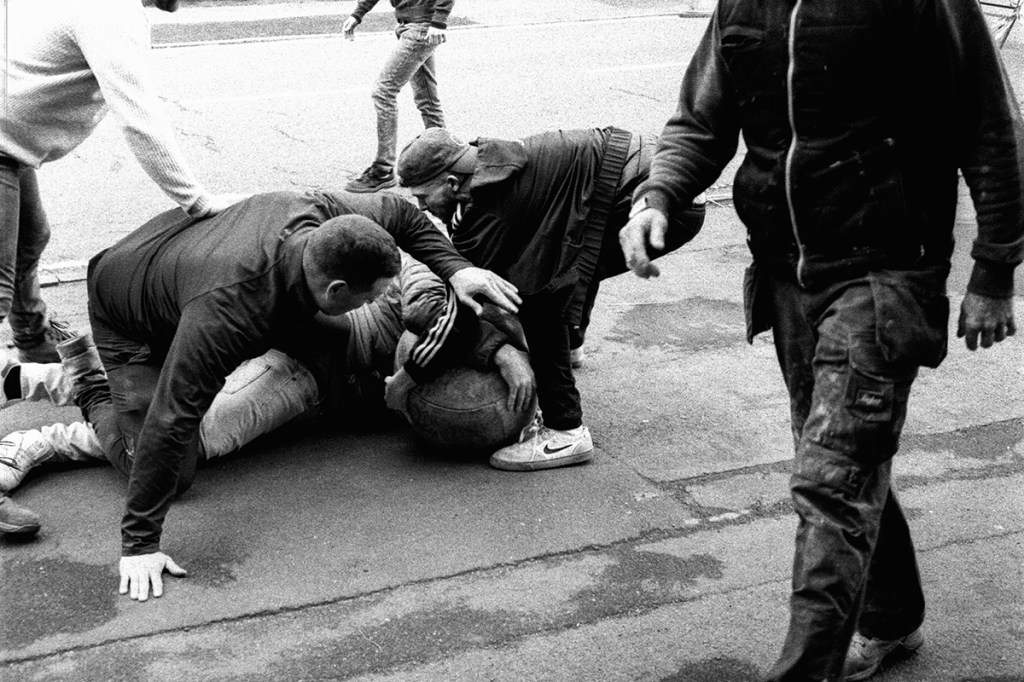
The Atherstone Ball Game has been described (along with a few similar games) as Britain’s Most Dangerous Game. The rules are incredibly simple: the last person holding the ball at the end of the game wins. No weaponry. No killing.
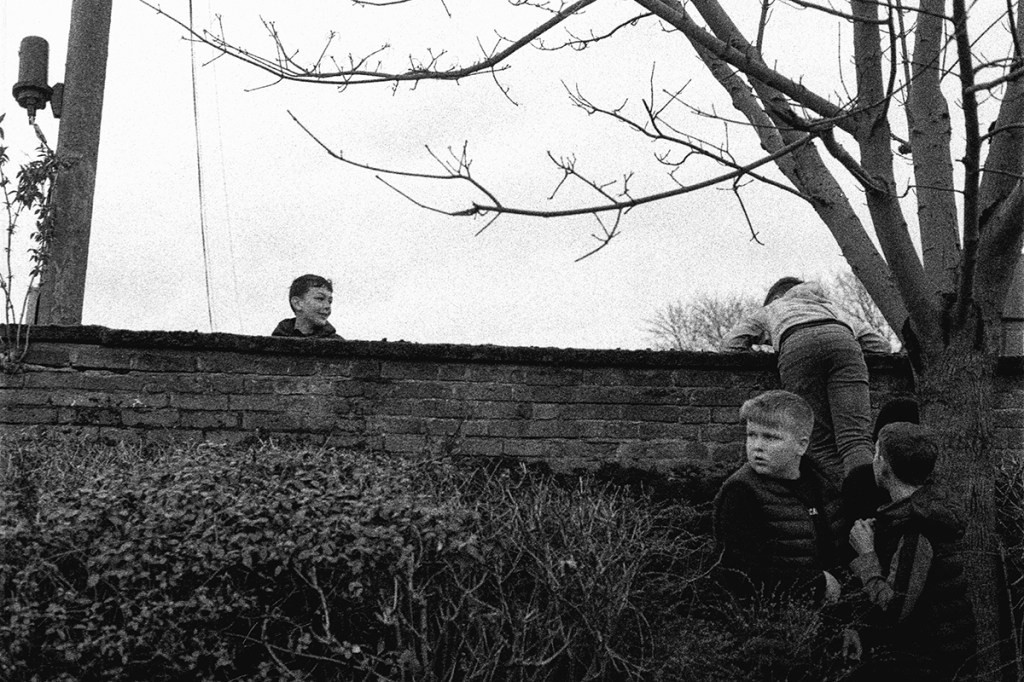
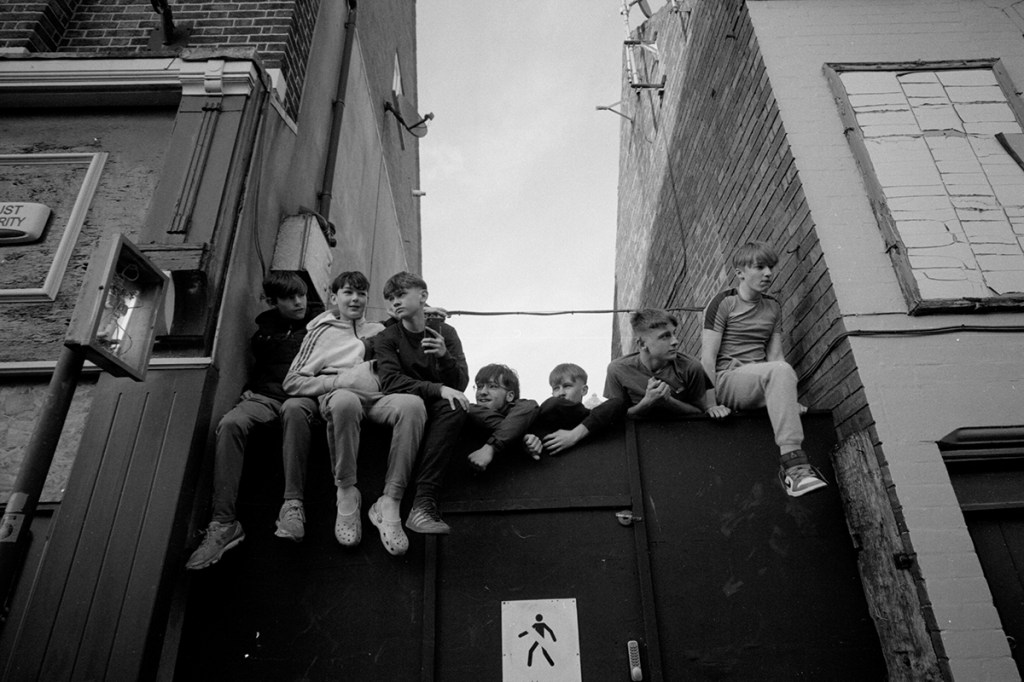
Aside from these it is effectively a free for all, the ultimate mosh pit, melee, hand to hand PvP combat zone. Photographing in this situation, which I have done for several years now, is very tricky, a mess of limbs is the usual result with the occasional stand-out chance catch. As such, the best photographs I have are of the fringes, the build up, the celebration after the winner is declared, all the little moments in between, contribute to a portrait of the town itself, the bystanders and onlookers and sometimes accidental participants.
To spend multiple years with a community means there are young people in my images who I will watch grow into adults, move from participating in the young peoples game to the real thing. So many little details that a one-day worker would overlook in favour of what to them is the main event.
The selection of photographs is from 2022, 2025, and 2026, all black and white film and all showing a different aspect of the periphery of the game, with only a few hints at the play of the thing itself. Over time as I return each year I find myself working differently, not making the same image twice, and keeping mark of the advances I’ve made since the previous effort. – Simon King
Bio
Simon King is a London-based photographer whose editorial photography includes work from his role photographing Behind-the-Scenes and Stills on media productions as well as portraiture, journalism, and fashion. He is a working journalist, and recently was voted as a committee member of the NUJ Freelance Branch.
::
Simon King – London, UK
website: https://www.digitalwoodcut.com
@simonking_v
YouTube: https://youtu.be/MLpWMKblXwo?si=3z7THjLCSVrw02wE
The ongoing series of features and posts on the significance of documentary photographers and photojournalists can be found at Wobneb Magazine.

